
WHAT’S GOING ON

Behind-The-Scenes

In the e3 Webcasting Studio

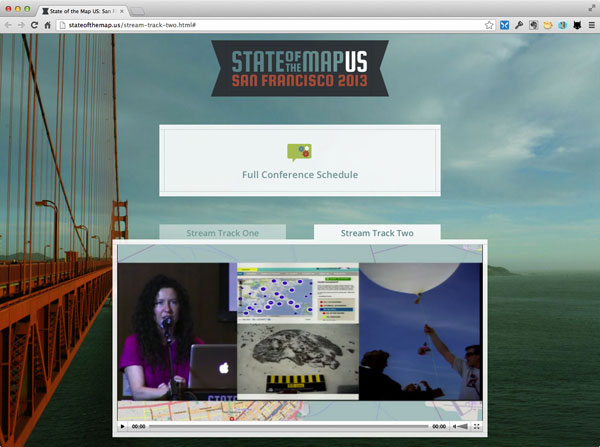
SOTMUS-Track-2-Stream.jpg

June 19, 2013 Tim Arthur0

Webcasting from San Francisco, California, Ways to Bring Your Aerial Imagery into OpenStreetMap

Earlier this month the 2013 State of the Map US conference was held in beautiful San Francisco at the Mission Bay Conference Center June 8-9, and e3 Webcasting was honored to live stream webcast video of each session around the globe. 380+ people came out to talk OpenStreetMap, learn from each other, and move the project forward. Bonnie and Alex from the MapBox team were amazing to work with and made sure we had everything we needed to make the live stream video webcast happen.

craigslist and OpenStreetMap

Dennis Watson’s presentation on building a craigslist scale map installation with OpenStreetMap (OSM) data was very insightful. He explained that craigslist serves 50 billion monthly page views to 60 million users across 700 sites in 70 countries, naturalized into 13 languages. Craigslist users post 100 million+ classified ads per month, including more than 2 million new job listings per month, and how self hosting a complete map service from top to bottom at this scale presents many challenges including: live updating of OSM data, map styling and design for sense of purpose, rendering and serving maps to end users, geocoding user input, searching geodetic data, displaying geodetic results in meaningful ways that the end user can understand, giving back to OSM with user data feedback. In his talk Dennis addressed the above issues and discussed how his team implemented the above at craigslist scale. His overview of the zoom tile numbers were staggering at 17 billion tiles. It was great to get an look inside craigslist from a mapping perspective.

OpenStreetMap and foursquare

Nathaniel V. Kelso and David Blackman’s presentation on “Introducing Quattroshapes! The Global Polygon Gazetteer”, was a really interesting insiders look into foursquare’s need for quality place data to power its geocoding engine to ensure the best user recommendations. When someone searches for best coffee in Manhattan, a simple venue to place point or venue to place bounding box search can result in venues in Manhattan and Jersey City overwhelming the results for Manhattan. To improve these recommendations, they’ve created an authoritative source of polygons around a curated list of places. This gazetteer of non-overlapping polygons provides more relevant results to users than just simple point geometries. This work is based on several factors including: geocoded photos from Flickr, foursquare checkins, and an extended version of Natural Earth. This new polygon gazetteer data is used in David Blackman’s TwoFishes, the coarse splitting geocoder (and reverse geocoder) written in scala at foursquare. It was great to get to see how foursquare and others are managing their mapping data.

Building Community in Nicaragua

Felix Delattre’s presentation on community mapping in Nicaragua was a great overview on using OpenStreetMap to get people involved and working with technology. And at the same time building community by making a map of the community. Creating an open data map helps grow the local economy and adds value to the city. His talk covered how the OpenStreetMap community gained momentum in the country, what lessons they have learned on community building with OSM, what real life problems exist, what makes mapping in Central America unique, and where the local community wants to go next. His story-telling session about his experiences, the monthly mapping parties, their influence on local politics, and communities, was very engaging.

The State of the Map US was an amazing conference with speakers ranging from the National Park Service to Voxel.js an open source port of Minecraft, to the Redcross and how maps played a huge role in the Haiti earthquake relief efforts and how the OpenStreetMap project was able to give back to the community. If you missed the conference or you missed the live stream webcast of the conference you can watch all the session videos on the State of the Map US conference website. See you next year at the conference or online.

SOTMUS 2013 Conference 411

If you’d like to learn more about the State of the Map US 2013 Conference or would like to attend a conference in the future, you can find out more by visiting the conference website or following them on Twitter:
Website: SOTMUS
Twitter: @sotmus
Conference Videos On Demand: SOTMUS 2013 Vimeo Channel

Some of our favorite Tweets from the State of the Map US 2013


TXJS_Stream.jpg

June 5, 2013 Isaac Arthur0

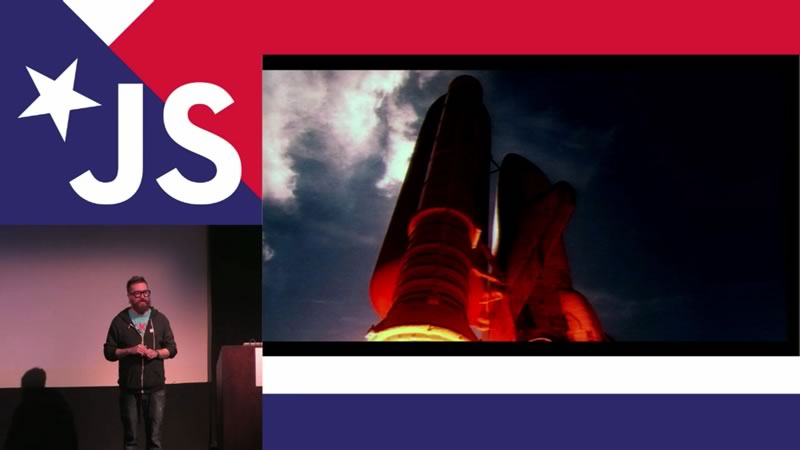
Webcasting from Austin, Texas, The e3 Webcasting crew powers up the live stream for TXJS.

As people across the nation tuned into the TXJS Live Stream Webcast to view the conference from the convenience of their office, iPad or smartphone the conference team was getting ready to open the doors. It was a hot Texas day, although still early in the morning, as men and women crowded into the historic Paramount Theatre in Austin. Laptops open, a cup of coffee and a taco in hand, the audience got ready to hear from co-laborers and experts in their particular line of work. What event was this? The Texas JavaScript Conference (TXJS) held on April 15, 2013.

Topics Covered at TXJS

JavaScript (JS) may be beyond the comprehension of most of us not in the programming world, but for those in that field this event proved to be quite an exciting and festive gathering. Speakers from around the United States and the United Kingdom spoke on a variety of subjects, from HTML, CSS, and Node.js to things like web applications, entrepreneurism, content management systems, the legal issues related to open source, and how the British government was able to revamp their “user experience.” Sound like a jam-packed day? That wasn’t even the half of it!


Conference organizer Alex Sexton brought together this diverse group of developers and designers to celebrate, learn, and anticipate the future of their craft. With the TXJS Conf. being only a one-day event, there was a lot to fit into the sessions, and a lot of catching-up and networking to do in between.

Live Video Webcast Expands the TXJS Conference Reach

But, with something as big and widely used as JavaScript, the estimated 325 people in attendance there at the Paramount in Austin were not the only interested parties; nor were they the only die-hard JS fans out there. This year e3 Webcasting was brought in to provide live streaming of all the sessions for TXJS. Once the stream went live and the talks began, 250 + online viewers tuned in to catch the event. These were not merely distant, mildly curious on-lookers who tuned in for five minutes and moving on – this was a steady audience-base that hung with us for the majority of the day. The numbers grew throughout the morning sessions, which began around 9 am, and only started decreasing toward the end of the day (which wrapped up at roughly 6:30 pm). The largest amount of online viewers exceeded 300. This means that nearly double the amount of people who actually came to Austin that day were able to be a part of the conference’s activities.

Frances Berriman | TXJS 2013 from SlexAxton on Vimeo.

Reaching the other 90% of Your Audience via Streaming

Clearly, whether we’re talking about a weeklong mega-event or a single-day, one-track conference, everyone has the ability to maximize the potential of webcasting technology to reach the other 90% of their audience that isn’t physically present. It was a pleasure to be a part of Texas JavaScript Conference and to bring the event to the more-than-300 people who were able to watch the stream that day. This was not only a success for this year’s TXJS, but could also have benefits in the future – anyone avid enough to watch a conference online for a whole day will definitely want to be there in person the following year! Like the final speakers who talked about the future of the industry and the exciting places it might go, we are thrilled to be involved in the business of webcasting, and are looking forward to what comes next.

TXJS 2013 Conference 411

If you’d like to learn more about the TXJS Conference or would like to attend a conference in the future, you can find out more by visiting the conference website or following them on Twitter:
Website: TXJS
Twitter: @TXJS
Conference Videos On Demand: TXJS Vimeo Channel


hobbit.jpg

December 31, 2012 Isaac Arthur0

Live stream webcast of the Hobbit Movie World Permiere

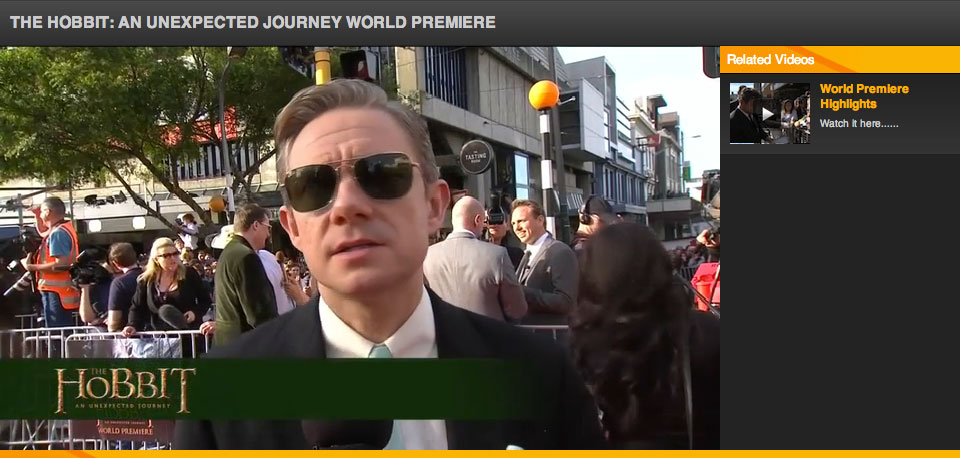
Examples of the game-changing nature of webcasting are everywhere you look. From large conferences to political conventions to smaller niche events, live streaming is exploding all over the planet and in many different settings. Now, even major motion picture studios are realizing the value that this powerful resource can bring. This last November, by employing Hollywood event streaming company Now Live, the Warner Bros. and New Line Cinema social media users from around the world were able to virtually travel to New Zealand to participate in one of the most highly anticipated movie events of the year: the world premiere of director Peter Jackson’s newest trek into Middle Earth, the world of author J.R.R. Tolkien’s fantasy literature, The Hobbit: An Unexpected Journey.

I tuned-in to the stream that night, along with thousands of Tolkien and movie enthusiasts: because, being in the business of webcasting, and a fan of the films as well, I had a staked interested. After clicking the link to the stream’s page on Facebook, it was apparent that they had rolled out the red carpet, not only for the film’s cast and crew, physically in attendance in Wellington, but also for the curious and expectant audience across the globe. Those watching the live stream of the pre-show premiere festivities were treated to sweeping shots of the lengthy red carpet, musical performances by Neil Finn and his band (Finn is a New Zealander himself and the music artist behind the “Song of the Lonely Mountain” which is featured in the movie’s credits) and up-close interviews with the actors and filmmakers who created the film. Even if one had the opportunity to be there in person, one probably wouldn’t have had a better experience than sitting at home watching the stream.

Between delighting fans with behind-the-scenes stories and glimpses of their favorite actors, as well as enticing others to find out more about the film, and boosting the hype and excitement about The Hobbit before its theatrical release, the live stream webcast was a huge success. All the music, the celebrity sightings, and the sneak peeks at movie itself (not shown in the live stream, of course) had the effect of generating even more word of mouth and anticipation. Hollywood marketers know how to pack people in and the live-streamed premiere is just one way that technology has given studios a way to reach audiences. The movie has been in theaters since December 14 and has remained in the Top 10 in the box office, currently #1 – ahead of the Django Unchained and Les Misérables – and has grossed $222.7 million. Not to commit the fallacy of assuming that the live stream webcast was the deciding factor here, yet one does have to wonder how live streaming technology could have helped reach greater numbers of filmgoers and propelled the other films to the top slot now occupied by Peter Jackson’s The Hobbit. Speculation aside, it is quite clear that live streaming is quickly becoming an indispensable tool for conferences, events, and the silver screen.


GMO-FREE-Jeffrey-Smith.jpg

November 9, 2012 Isaac Arthur0

Arnout Kazemier from Nodejitsu, @3rdEden, presenting at RealtimeConf

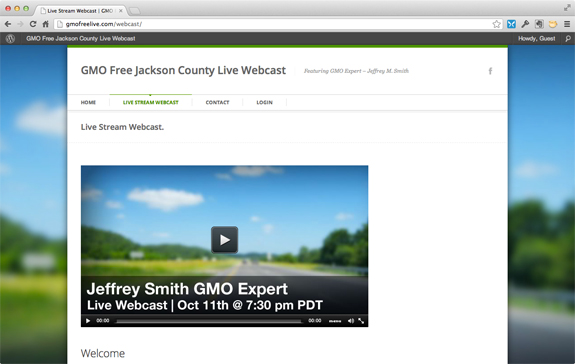
What if you could have accessed vital information about a biotech industry hijacking of American foods and agriculture – information that could change the way you think, eat, shop, and vote – all from the comfort of your home? Well, for one night in the middle of last month, you could have. That is, e3 Webcasting live streamed a talk given by author, activist, and filmmaker Jeffrey M. Smith put on by GMO-Free Jackson County and sponsored by the Ashland Food Co-op and Project Rogue Valley via the GMO-Free Live website.

Smith’s talk dealt with the terribly adverse effects of genetically modified organisms (GMO’s) on the health of human beings, the soil of our farms, and the threat to the very freedoms of our nation posed by monopolistic GMO-promoting companies like Monsanto and Syngenta. His books and recent film, titled “Genetic Roulette: The Gamble of our Lives,” join a long line of films and books, such as the Academy Award Nominated documentary “Food, Inc.” and agricultural reformer Joel Salatin’s book “Folks, This Ain’t Normal” in sounding a warning against GMOs.

This issue is one that involves a wide range of people from various age groups, walks of life, and political persuasions. From concerned conservatives to the liberal “foodies” of the organic movement, from farmers to scientists to health fanatics, GMOs have become a hot-button topic of discussion and debate. Jeffrey Smith spoke to an auditorium full of Southern Oregon residents, some of them die-hard supporters of Project Rogue Valley already, and others, perhaps, merely curious about the controversy surrounding GMOs, and which has been raging since their introduction. That night represented the efforts of a grassroots movement from the local area, and Smith was practically a celebrity there. He was able to bring his knowledge of the issue to bear; knowledge gained from extensive research, writing, and leadership around to the world. He has worked hard to educate citizens, empower activists, and influence legislators. He spent the night citing facts and data, exposing the destructive track record of GMO’s in our nation and globally. He made a strong case for attaining the status of “GMO-free” for Jackson County, as well as for other initiatives such as California’s Prop 37, a bill requiring GMO products to be labeled, which is currently being battled out in the Golden State. His talk was persuasive, despite the marketing and the political spin created by the GMO manufacturers. As second U.S. President John Adams once said, “Facts are stubborn things; and whatever may be our wishes, our inclinations, or the dictates of our passions, they cannot alter the state of the facts and evidence.”

Wherever you come down on this particular issue, webcasting events such as these can help spread awareness, and bring in a wider audience then those already committed or curious enough to attend in person. There are many causes like GMO-Free Jackson County that need to broadcast their message to American citizens, or even to worldwide audiences. Live streaming could be the key to disseminating critical information and starting a movement. That’s what e3 is all about: changing the world, one webcast at a time…


Redis-Conf-Grfx.jpg

October 27, 2012 Isaac Arthur0

Aren Sandersen from Pinterest, @P-arensand, presenting at RedisConf

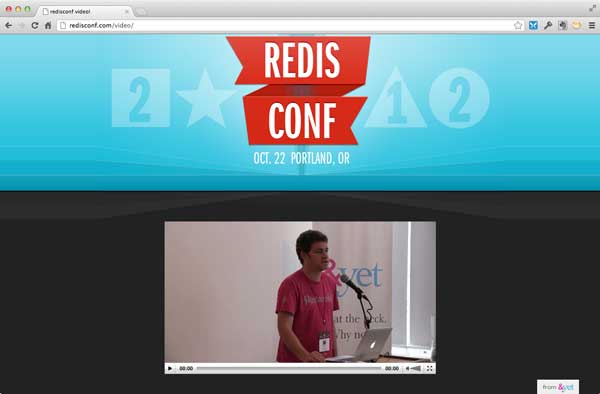
On October 22, e3 Webcasting live streamed the RedisConf in Portland, Oregon. It is a one day conference born out of the larger Realtime Conference put on by web application and design company &yet, focused specifically on the niche of programmers and developers who use the open-source database known as Redis, which is a development project sponsored by VMware.

The amazing team at &yet, led by Adam Brault, created a welcoming, unique, and creative environment for their diverse community to come together. Though a smaller-scale gathering, compared to it’s big brother the Realtime Conf, the RedisConf was well organized and stimulating. People from all over the United States, as well as internationally, came to this once-a-year event. It was a chance to network, discuss ideas, get updates on the progress made by other colleagues from around the world, and learn new techniques. Where the Realtime Conf would deal with the wider spectrum of topics related to realtime application development (for laymen, think Twitter instantly updating posts in “realtime”), the Redis Conference dug into the pros and cons related to using Redis as a multi-use tool on the Internet.

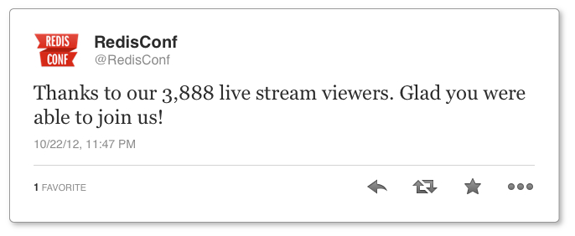
Tweet by @RedisConf

The &yet team kicked off the RedisConf with a performance of Bohemian Rhapsody rewritten from a RedisConf point of view. Streaming live from The Cleaners at the Ace Hotel, over the Internet connection &yet had installed by the pro’s at Stephouse Networks, the conference was off to a great start. Speaker after speaker got up and presented to the audience of about 150-200 men and women in the room; Pieter Noordhuis, @pnoordhuis was on hand to talk about the Redis Core, and Salvatore Sanfilippo, @antirez, even spoke from his home in Italy via several pre-recorded videos.

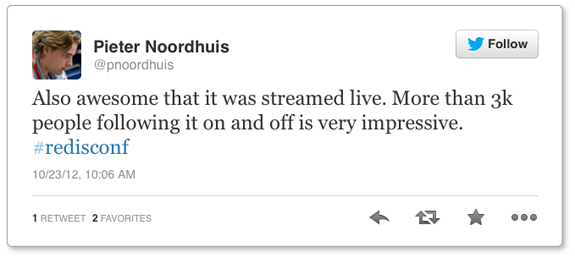
Tweet by Pieter Noordhuis @pnoordhuis

The conference attendees listened with laptops open, absorbing the info; while we were busy making sure that the people who were watching online had the best possible video experience. As the day went on, an Amazon AWS EC2 outage started unfolding. Which, as reported by Techcrunch, affected major services such as Foursquare, Reddit, Minecraft, GitHub, Heroku, imgur, Pocket, Coursera and HipChat. Providentially, we were unaffected and the video stream went off without a problem! Overall, though there are always things that could have been improved, the RedisConf stream was a huge success. Later, we were informed by Adam Baldwin of &yet that the live stream had been watched by as many as 3,000 online viewers!

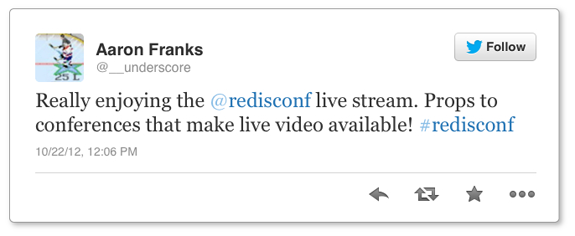
Tweet by @__underscore

People raved about the live stream on Twitter. They were impressed by the quality of the video, and they voiced their enthusiasm online. The RedisConf live web stream was a smash hit!

Many conferences think live-streaming is too expensive to be a viable option for smaller events, or have had negative experiences with poorly executed webcasts in the past. Many remote viewers were grateful for the chance to view the conference even though they were unable to attend in person. I suspect that there are many other conferences out there that could benefit from a well-done live stream webcast.

[message type=”custom”]

RedisConf 411

If you’d like to learn more about the RedisConf or would like to attend next year’s conference you can find out more by visiting the conference website or following them on Twitter:
Website: RedisConf
Twitter: @redisconf
Hashtag: #redisconf
[/message]


e3_streaming_video.jpg

June 15, 2012 Isaac Arthur0

[custom_frame_left]
[/custom_frame_left][clear]

New technology always leads to expansion. It could be a physical expansion such as national borders or agrarian production and industry, it could be intellectual: an expansion of culture, literacy and ideas. The roads built by the Roman Empire made possible the swift movement legions of soldiers, to their political and military advantage, but it also led to the proliferation of the Christian gospel, which proved to be their ideological undoing. A brief look at the history of invention and innovation, from the printing press to the internet, from the telegraph to the smart phone, from the cotton gin to modern farming machinery, the roads of Rome to the automobiles of Henry Ford, Galileo’s telescope to landing a man on the moon, and so on, technological advancement has led to possibilities that previous generations did not have. We now live in a world where technology surrounds us, and the tools we need to advance in business, communication, or any other pursuit, are literally at our fingertips. Here are e3 Webcasting, one such portal into new and exciting possibilities is live video streaming, we like to call it e3 streaming video.

For instance: my family is involved in a speech and debate league for homeschoolers. Recently, when my brothers competed in an out-of-state tournament, those of us still at home crowded around my mother’s iPhone as we listened to the award ceremony by means of the speakerphone. Distant, garbled words and distracting noises made hearing the tournament results nearly impossible. Because of this difficultly, we normally just wait for a text message or phone call after the ceremony. No image, no interaction, just anticipating the news report when it’s all over. Wouldn’t it be neat if there were a way to somehow be there (without actually being there); to be able to watch the event live, maybe even interact digitally as it happens? There is a way to do just that: It’s called live streaming.

Live streaming video enables video, whether of an event, lecture, conference, (etc.) to be broadcasted (that is, webcasted) to anywhere on the planet (provided there’s a computer and internet) instantaneously. People “tuning-in” to the webcast can even interact via chat boxes and social media. The potentialities and possibilities of this technological tool-set are numerous and vast. Just as previous inventions have revolutionized the world, so too video streaming will, and is today. Filmmakers, web developers, and anyone who works in the media business have a vested interest in this. Streaming is transforming the way that films and television are distributed to audiences, as witness the rise of services like Netflix, Amazon Instant Video and Apple TV. But this is not a service that is limited to those corporations or Hollywood honchos. This is something that can – and should – be used by as many individuals, groups, companies, and organizations as need it (see: “Benefits of Streaming and Webcasting Events”).

Just as the printing press allowed for written material to be dispersed to larger audiences, giving writers the influence to change the world, video streaming – the Gutenberg of our times – gives one the ability to reach people, to work with greater flexibility, liberty and ease, and in the long run, to affect change through streamed media content. That’s why at e3 Webcasting we are dedicated to “changing the world one webcast at a time.”


e3 Webcasting
Privacy Overview

This website uses cookies so that we can provide you with the best user experience possible. Cookie information is stored in your browser and performs functions such as recognising you when you return to our website and helping our team to understand which sections of the website you find most interesting and useful.