
WHAT’S GOING ON

Behind-The-Scenes

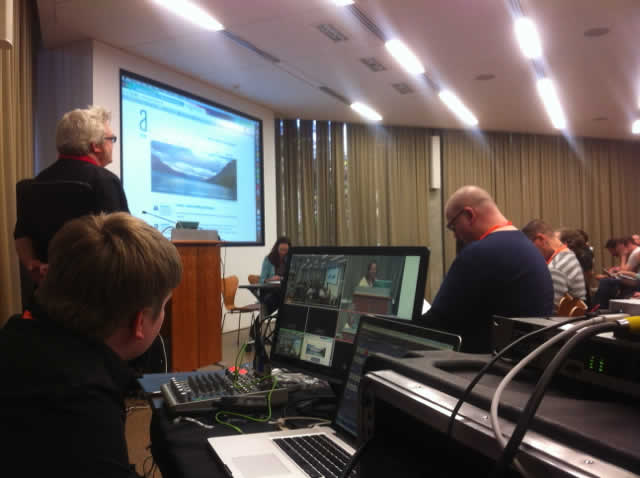
In the e3 Webcasting Studio

SOTMUS-Track-2-Stream.jpg

June 19, 2013 Tim Arthur0

Webcasting from San Francisco, California, Ways to Bring Your Aerial Imagery into OpenStreetMap

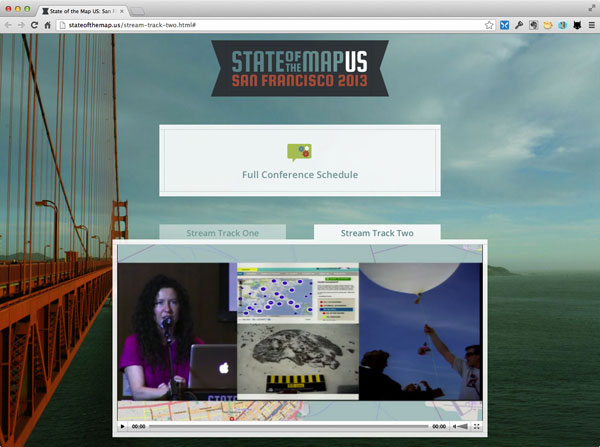
Earlier this month the 2013 State of the Map US conference was held in beautiful San Francisco at the Mission Bay Conference Center June 8-9, and e3 Webcasting was honored to live stream webcast video of each session around the globe. 380+ people came out to talk OpenStreetMap, learn from each other, and move the project forward. Bonnie and Alex from the MapBox team were amazing to work with and made sure we had everything we needed to make the live stream video webcast happen.

craigslist and OpenStreetMap

Dennis Watson’s presentation on building a craigslist scale map installation with OpenStreetMap (OSM) data was very insightful. He explained that craigslist serves 50 billion monthly page views to 60 million users across 700 sites in 70 countries, naturalized into 13 languages. Craigslist users post 100 million+ classified ads per month, including more than 2 million new job listings per month, and how self hosting a complete map service from top to bottom at this scale presents many challenges including: live updating of OSM data, map styling and design for sense of purpose, rendering and serving maps to end users, geocoding user input, searching geodetic data, displaying geodetic results in meaningful ways that the end user can understand, giving back to OSM with user data feedback. In his talk Dennis addressed the above issues and discussed how his team implemented the above at craigslist scale. His overview of the zoom tile numbers were staggering at 17 billion tiles. It was great to get an look inside craigslist from a mapping perspective.

OpenStreetMap and foursquare

Nathaniel V. Kelso and David Blackman’s presentation on “Introducing Quattroshapes! The Global Polygon Gazetteer”, was a really interesting insiders look into foursquare’s need for quality place data to power its geocoding engine to ensure the best user recommendations. When someone searches for best coffee in Manhattan, a simple venue to place point or venue to place bounding box search can result in venues in Manhattan and Jersey City overwhelming the results for Manhattan. To improve these recommendations, they’ve created an authoritative source of polygons around a curated list of places. This gazetteer of non-overlapping polygons provides more relevant results to users than just simple point geometries. This work is based on several factors including: geocoded photos from Flickr, foursquare checkins, and an extended version of Natural Earth. This new polygon gazetteer data is used in David Blackman’s TwoFishes, the coarse splitting geocoder (and reverse geocoder) written in scala at foursquare. It was great to get to see how foursquare and others are managing their mapping data.

Building Community in Nicaragua

Felix Delattre’s presentation on community mapping in Nicaragua was a great overview on using OpenStreetMap to get people involved and working with technology. And at the same time building community by making a map of the community. Creating an open data map helps grow the local economy and adds value to the city. His talk covered how the OpenStreetMap community gained momentum in the country, what lessons they have learned on community building with OSM, what real life problems exist, what makes mapping in Central America unique, and where the local community wants to go next. His story-telling session about his experiences, the monthly mapping parties, their influence on local politics, and communities, was very engaging.

The State of the Map US was an amazing conference with speakers ranging from the National Park Service to Voxel.js an open source port of Minecraft, to the Redcross and how maps played a huge role in the Haiti earthquake relief efforts and how the OpenStreetMap project was able to give back to the community. If you missed the conference or you missed the live stream webcast of the conference you can watch all the session videos on the State of the Map US conference website. See you next year at the conference or online.

SOTMUS 2013 Conference 411

If you’d like to learn more about the State of the Map US 2013 Conference or would like to attend a conference in the future, you can find out more by visiting the conference website or following them on Twitter:
Website: SOTMUS
Twitter: @sotmus
Conference Videos On Demand: SOTMUS 2013 Vimeo Channel

Some of our favorite Tweets from the State of the Map US 2013


WIAD2013_LA_Webcast.jpg

February 26, 2013 Tim Arthur0

The e3 Webcasting crew streaming

On February 9th, 2013, the IA Institute sponsored World IA Day, a 1 DAY 15 CITY event focusing on Information Architecture. Along with a team of global sponsors the local coordinators will assemble fifteen 1 DAY conferences all around the globe in 15 CITIES to build awareness and celebrate information architecture (IA).

What is Information Architecture?

Information architecture (IA) is the art and science of organizing and labeling data including: websites, intranets, online communities, software, books and other mediums of information, to support usability.[1] It is an emerging discipline and community of practice focused on bringing together principles of design and architecture, primarily to the digital landscape.[2][page needed] Typically, it involves a model or concept of information which is used and applied to activities that require explicit details of complex information systems. These activities include library systems and database development.” as defined by Wikipedia

Initial Talks

What initially started as a conversation and emails in early January between; Dan Klyn of The Understanding Group, Jeff Parks of DIGIA UX Inc., Andrea Resmini of FatDUX Group, and Laura Creekmore of Creek Content about how best to achieve a World IA Day 2013 webcast. By the end of the conversation the World IA Day 2013 Los Angeles Live Webcast from UCLA’s Charles E Young Research Library Conference Center had been birthed.

Planning Starts to Take Shape

At this point in the process, we started working with the very talented LA coordinator Alberta Soranzo as she served as liaison with the UXPA LA Board as they planned the WIAD 2013 in Los Angeles event.

The Conference Webcast

February 9th dawned a beautiful day in Los Angeles, and a crowd gathered early at the UCLA’s Charles E Young Research Library Conference Center eager to expand their IA knowledge and practice. The opening speaker of the day was Aaron Irizarry from NASDAQ OMX helping us wrap our heads around “Understanding IA.” Pulling from this years theme of what we mean when we say “architecture” and when we say “design” in our research and practice. Next up was David Fiorito of Empathy Lab speaking on “Thinking Navigation.” Following David was Greg Nudelman of DesignCaffeine, Inc. who connected with us in LA via GoToMeeting remotely from San Francisco. Greg shared an amazing mobile navigation technique he and his team have been working on. To see it in action, watch the video below.


Following lunch, Chris Chandler from the The Walt Disney Company and Lynn Boyden from USC Web Services brought us back together for the afternoon and presented on “Other People’s Problems.” And simple steps we can take to implement mentoring and the impact it can have on people’s lives. After a short break, Eric Reiss from the FatDUX Group, reminded us that “Content is still king, but its the arrows – the links that create value for our clients,” closing out the day by pulling all the presentations together with the Plenary.

Webcast Audience Reach

World IA Day 2013 LA was a smashing success! The live stream video webcast was watched by viewers in London, Germany, Sweden and beyond. Hopefully next year we can get even more World IA Day cities streaming online. Until next year…

World IA Day 2013 Conference 411

If you’d like to learn more about the World IA Day LA Conference or would like to attend next year’s conference you can find out more by visiting the conference website or following them on Twitter:
Website: World IA Day
Twitter: @WIAD_LA
Hashtag: #WIADLA
Facebook: World IA Day
Conference Videos On Demand: World IA Day YouTube Channel


GMO-FREE-Jeffrey-Smith.jpg

November 9, 2012 Isaac Arthur0

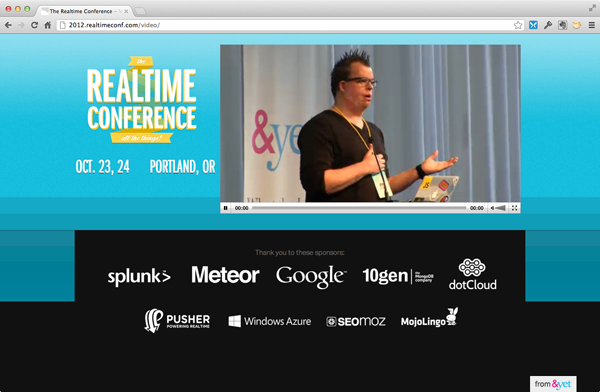
Arnout Kazemier from Nodejitsu, @3rdEden, presenting at RealtimeConf

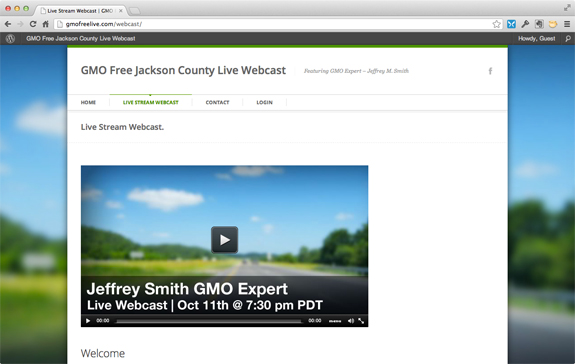
What if you could have accessed vital information about a biotech industry hijacking of American foods and agriculture – information that could change the way you think, eat, shop, and vote – all from the comfort of your home? Well, for one night in the middle of last month, you could have. That is, e3 Webcasting live streamed a talk given by author, activist, and filmmaker Jeffrey M. Smith put on by GMO-Free Jackson County and sponsored by the Ashland Food Co-op and Project Rogue Valley via the GMO-Free Live website.

Smith’s talk dealt with the terribly adverse effects of genetically modified organisms (GMO’s) on the health of human beings, the soil of our farms, and the threat to the very freedoms of our nation posed by monopolistic GMO-promoting companies like Monsanto and Syngenta. His books and recent film, titled “Genetic Roulette: The Gamble of our Lives,” join a long line of films and books, such as the Academy Award Nominated documentary “Food, Inc.” and agricultural reformer Joel Salatin’s book “Folks, This Ain’t Normal” in sounding a warning against GMOs.

This issue is one that involves a wide range of people from various age groups, walks of life, and political persuasions. From concerned conservatives to the liberal “foodies” of the organic movement, from farmers to scientists to health fanatics, GMOs have become a hot-button topic of discussion and debate. Jeffrey Smith spoke to an auditorium full of Southern Oregon residents, some of them die-hard supporters of Project Rogue Valley already, and others, perhaps, merely curious about the controversy surrounding GMOs, and which has been raging since their introduction. That night represented the efforts of a grassroots movement from the local area, and Smith was practically a celebrity there. He was able to bring his knowledge of the issue to bear; knowledge gained from extensive research, writing, and leadership around to the world. He has worked hard to educate citizens, empower activists, and influence legislators. He spent the night citing facts and data, exposing the destructive track record of GMO’s in our nation and globally. He made a strong case for attaining the status of “GMO-free” for Jackson County, as well as for other initiatives such as California’s Prop 37, a bill requiring GMO products to be labeled, which is currently being battled out in the Golden State. His talk was persuasive, despite the marketing and the political spin created by the GMO manufacturers. As second U.S. President John Adams once said, “Facts are stubborn things; and whatever may be our wishes, our inclinations, or the dictates of our passions, they cannot alter the state of the facts and evidence.”

Wherever you come down on this particular issue, webcasting events such as these can help spread awareness, and bring in a wider audience then those already committed or curious enough to attend in person. There are many causes like GMO-Free Jackson County that need to broadcast their message to American citizens, or even to worldwide audiences. Live streaming could be the key to disseminating critical information and starting a movement. That’s what e3 is all about: changing the world, one webcast at a time…


RealTimeConf_image.jpg

November 9, 2012 Isaac Arthur0

[custom_frame_left]
Arnout Kazemier from Nodejitsu, @3rdEden, presenting at RealtimeConf[/custom_frame_left][clear]

For just two days, programmers and developers from all over the world gathered under one roof in Portland, Oregon for the 2012 Realtime Conference organized by web application and design team &yet, and sponsored by such companies as Google, DotCloud, Windows Azure, SEOMOZ, MojoLingo, and more. This was the second year this kind of an event had happened. Last year in November the same group put on the “Keeping It Realtime” conference. However, this year would be different in one crucial way: this year &yet hired e3 Webcasting to live stream the conference and the more narrowly focused RedisConf the day before (see previous article for details).

[custom_frame_left]via the RealtimeConf live web stream[/custom_frame_left]The conference was held at PureSpace, a venue in Portland’s Pearl district. The people at &yet had a big vision for making this conference the highlight of the year for their attendees: they did things with style. On the first morning, the attendees were shuttled to the conference from the hotel, but were dropped off a few blocks away where a marching band awaited them to escort the crowd of developers into the building with fanfare! That night, the conference set them home with a surprise performance by a children’s choir. Delicious food, lots of coffee, and an impressive line-up of speakers kept the conference rolling; but behind all this, there was a team of busy workers making it all happen. As the providers of the live streaming, e3 Webcasting was part of that crew.

Flexibility and problem solving are required whenever you are dealing with live events (which is the definition of webcasting). For instance, the night before the conference, as we were setting up our gear, we discovered that the projector, which was supposed to have an HDMI connection, only had a VGA connection. Thankfully, we were able to track down a converter / scaler that allowed us to use the projector feed in the live streams (for the presenters’ slides). But, in spite of technical speed bumps, the conference’s webcast turned out excellently.

The final night of RealtimeConf, &yet founder Adam Brault gave an inspiring call-to-action to his family of techies. He boldly challenged them to pursue the betterment of their work, and in the process, the betterment of the world. “To whom much has been given, much is required.” He called on his audience to become leaders in their respective spheres of influence. This stirring address put all the information that had been covered over the last two days into perspective. Thankfully, those who were unable to physically travel to Oregon did not have to miss out on this motivating presentation, thanks to live-streamed video. From the very first session of the conference to Adam’s closing talk, remote viewers were able to participate in the annual event. Webcasting the conference made it possible to spread the excitement and the inspiration of Realtime to a wider audience; incentivizing people who will want to be a part of it next year, and who knows where it will go from there.

[message type=”custom”]If you’d like to learn more about the RealtimeConf or would like to attend next year’s conference you can find out more by visiting the conference website or following them on Twitter:
RealtimeConf
@RealtimeConf
#RealtimeConf
[/message]

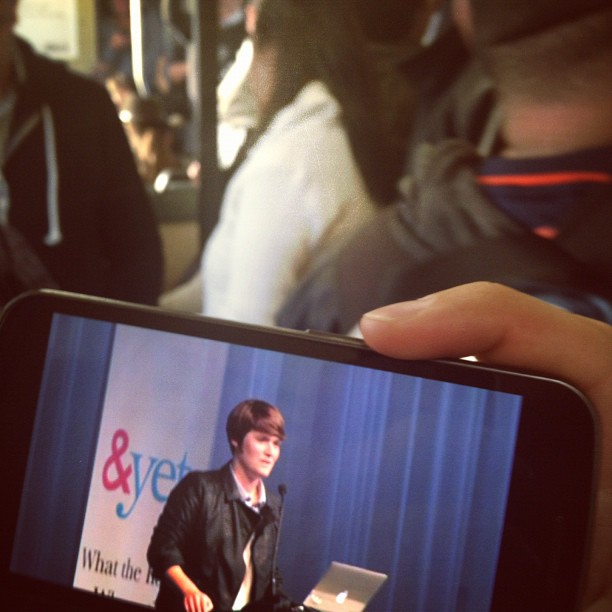
photo credit: Watching @caseorganic talk at #realtimeconf, in real time, on BART! Aaron Parecki via a cc


clickmeeting_infographic_feature_sm.jpg

August 10, 2012 Isaac Arthur0

[custom_frame_left]
Top 7 Webinar Statistics You Should Know Infographic[/custom_frame_left][clear]

The world is waking up to the exciting and valuable potential that webcasting can bring. Earlier in July, we looked at an Infographic created by AD:60 on the benefits of mobile sites, and particularly why this is relevant in light of webstreaming. They were not alone in their recognition of this technology. ClickMeeting, a company that provides online meeting services, recently released an Infographic of their own showing the advantages of “World Wide Webinars.” The observations made there are more feathers in the cap for webcasting, and add further credence to it’s necessity, as well as showing how empowering it can be to any company and/or event.

[custom_frame_left]
Top 7 Webinar Statistics You Should Know Infographic[/custom_frame_left]
Top 7 Webinar Statistics You Should Know Infographic by ClickMeeting

ClickMeeting looked at 8,197 online meetings in a 6-month period. (That means they examined 205 meetings a week and 872 per month. They clearly had access to a lot of material.) Their findings tell us:

    • 1. Most companies run more than 1 webinar a month

      According to the graphic, currently only 32% of companies are not running any webinars, while in contrast, 18% of companies run 1 to 3, 17% run 4 to 6 a month, 16% are running 7 to 12 webinars, 8% of companies rack up 13 to 26, and an even larger 9% of companies will run 27 or more in a given month!

      Those numbers show that ground is ripe for webcasting/webinar providers. With a 68% majority of businesses running webinars each month, and 50% running somewhere between 4 and 27 (or more) webinars a month, why not? e3 livestream services can help you get started today. This shows that the services of webstreaming are in high demand in the corporate world.

    • 2. People join webinars from all over the world

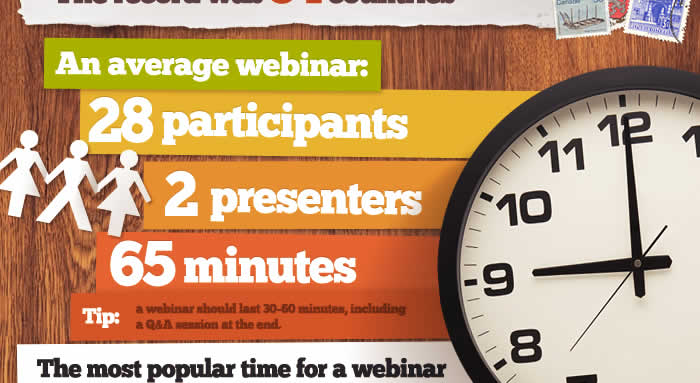
      The demand for webcasting is not restricted by geographic borders, but rather it is a global phenomenon. As this graphic shows, people from the U.S.A., Canada, Brazil, Norway, the UK, France, Egypt, Iran, Russia, Japan, Australia and more joined the webinars that ClickMeeting studied. These webinar statistics show the average webinar had 28 participants, 2 presenters, and ran for 65 minutes. (A good webinar should last 30-60 minutes the Infographic tells us.) There were people from at least 2 countries in an average webinar, while the record number has been 54 countries represented in the attendance of a single webinar!

      By incorporating webcasting into your company or event, you have the opportunity to reach an international audience!

    • 3. The most popular time for a webinar

      It’s also important to note what times are most expedient for webinars and webstreaming. Of those webinars researched on this Infographic, only 9% of them were held on Monday, then came Thursday with 16.7%, Friday with 17.9%, then Wednesday with 25.6%, and the most popular being Tuesday with 30.8% of the webinars being held on that day. As to time of day, the majority of the webinars were between 11am and 3pm. This shows that most webinars are on workdays during work hours, meaning that the market for webcasting/webinars is largely within corporations and businesses, though certainly not limited to that field.

    • 4. Why do people organize webinars?

      There are many reasons why one would organize a webinar and require webcasting services. Those give by the Infographic are: educating existing and potential customers (85%), lead generation (77%), building a strong position on the market (60%), converting new contacts (54%), making new contacts (31%), and making a webinar recording (30%). Whatever your reason may be, webcasting is an efficient and effective tool for businesses and events.

      Next, ClickMeeting goes on to explain How to organize a webinar:

    • 5. Traditional presentation: (1) About the company, (2) Our offer, (3) Our offer for you [or] Webinar presentation: (1) The main benefit, (2) Q&A, (3) Additional information, (4) Q&A, (5) Our offer, about the company, and (6) Q&A

      In the traditional presentation approach you spend the majority of your time giving background on the company, what you offer in general and then only a small portion of the presentation is directed at the specific needs of the customer/audience (“Our offer for you”).

      However, with a webinar, the structure is much more dynamic, allowing you to cut straight to the chase. You are freed to highlight the main benefits that your company/event is offering, and then give any additional information required as revealed by the interaction of the Q&A sessions. This means spending less time in exposition about the company, or general offers that are irrelevant to your particular audience. Thus, you get much greater effectiveness when you take advantage of webinars and webcasting for your presentation.

      Lastly, the Infographic gives the modus operandi for Inviting participants and promoting the webinar:

    • 6. When/Where?

      Getting the word out beforehand is crucial. The Infographic gives a basic outline of what people do to invite and promote their webinar/event. At 7 days before you should have a sign up form on your website. By 2 days before you have been promoting it and discussing it on your blog. Then, by the time it’s 2 hours before you start cranking it out in newsletter[s], on social media, on LinkedIn, through professional websites and forums and event websites. These are some simple steps ways to get let people know about your event ahead of time.

    • 7. Tools to use during webinar:

      Because you’ll want to go back and see how it went, archive it, and more, you’ll definitely want to record your webinar/event. Then, your presentation begins. It may include audio + video elements; you may want to use a whiteboard during the event; and you will definitely want to utilize the chat feature of hosting meetings/events/webinars online.

Through this Infographic, we’ve been introduced to some of the many reasons why webcasting is so valuable, and we’ve been given tips and facts to keep in mind so that we can make the best use of the technology. Webcasting is a prime option for any business, conference or any other organization or event to consider. The wide world is using webcasting technology through webinars; the only question now is: why aren’t you?


5_Ways_to_Use_Webcasting_for_Events_and_Conferences.jpg

June 29, 2012 Isaac Arthur0

[custom_frame_left]
[/custom_frame_left][clear]

If you want to maximize the capabilities of webcasting and live streaming then you’ve got to know the different ways that it can be used. There are countless ways that webcasting can be beneficially implemented by businesses and/or events, including: keynote speaker addresses, conference presentations, breakout sessions/conference tracks, trade show announcements, and even post conference follow-ups. After reading this article, you should be better informed on the ways that you could utilize webcasting to your advantage.

  • Keynote Speaker Address

    Keynote addresses are huge, meant to communicate core ideas and values to the audience and produce enthusiasm for the company or organization’s message, the overall tone of an event, or exciting announcements (think of Apple’s highly-anticipated addresses.) Webcasting can help you achieve that goal with greater effectiveness and scope. Because webcasting is via the Internet, this opens up a worldwide audience to your address, who will be eagerly listening in and participating through the online community. Not only does this open up doors for potential audience members, but it also provides greater flexibility for the speakers, as they could deliver an address from virtually anywhere and be seen and heard by the event attendees (both physical and virtual), thus maximizing keynote success and diminishing schedule problems. Webcasting could revolutionize a keynote address for your organization’s event, and on throughout the entire event.

  • Conference Presentation

    Once a keynote address is given, your audience is jazzed about your company and/or event, but usually there’s still more to come. Webcasting will play a huge role in any conference presentation. Not only will online audiences be able to watch the unfolding event, but they will also be able to participate through online chatting, Q-and-A, audience polling, and more. This will make conferences more accessible and less expensive for attendees by cutting back on travel costs and allowing people to attend from wherever they can get an Internet connection. While there are still huge perks to being at an event live and in person, this will increase your event’s coverage and extend the amount of people you are able to reach. Conference presentations are just one way that webcasting is able to help you make the most of your event.

  • Breakout Sessions/Conference Tracks

    You might think that an event’s online audience would be excluded from joining in on breakout sessions, or different conference tracks, but this too is within the range of possibilities that are presented through webcasting. All it takes is camera nearby in order to provide the web-stream crowd with access to any breakout session or extra feature at the conference/event.

  • Trade Show Announcements

    Normally, tradeshows are limited in who they can reach to those who can be physically in attendance. This means that many who are unsure whether they are interested in your products or services, do not attend. Travel costs and other factors keep them away. By providing webcasting you have an invaluable opportunity to demonstrate your trade wares to the world, and then direct them to where they can purchase what you have to offer, all with the click of a mouse.

  • Post Conference Follow-ups

    Even after a conference is over webcasting equips you with a way to follow-up with attendees, provide them with supplemental resources, as well as direct them to new info, coming events, and related products. This means that you are able to continue the event or conference long after the scheduled date is over, and those who attended in person have gone home. You can post pictures, videos, articles and requested material onto the event’s site – even host a second online event if you needed to. The sky is the limit.

Webcasting has the power to expand the horizons of any event. We’ve looked at the incredible opportunities that this technology opens up. Whether you are thinking about streaming a keynote address, a conference presentation, breakout session or conference track, or trade show, and how webcasting even creates an opportunity to expand your options beyond the actual event through post conference follow-ups. And this is merely the tip of the iceberg! Even utilizing just one of these ways to use webcasting would transform your event or conference, and heighten its success beyond your imagination!

e3 Webcasting, LLC., will manage all aspects of production for your live event webcast so that you can focus on what’s important, “your event’s message”. Our professional webcasting crew will provide you with a single point of contact for live webcasting and streaming production. We will work with you, as well as for you, to execute an effectively successful live webcast event.

For more information regarding the streaming services provided by e3 Webcasting or to speak with a representative, please contact us or give us a call at 888-695-2396.


e3 Webcasting
Privacy Overview

This website uses cookies so that we can provide you with the best user experience possible. Cookie information is stored in your browser and performs functions such as recognising you when you return to our website and helping our team to understand which sections of the website you find most interesting and useful.