WHAT’S GOING ON

Behind-The-Scenes

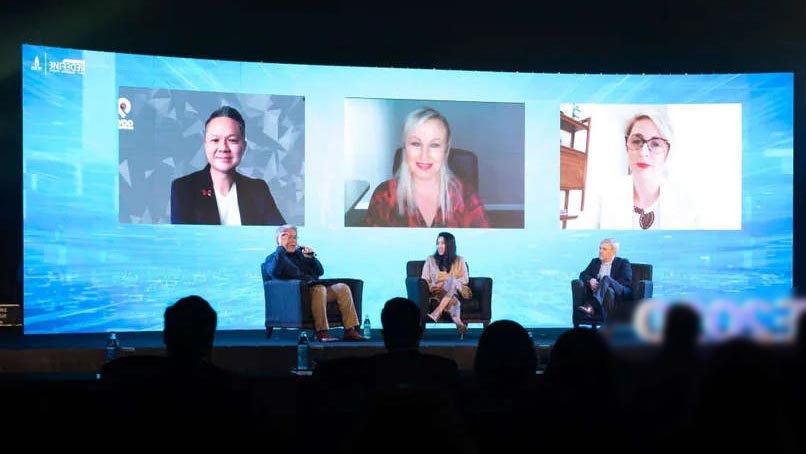
In the e3 Webcasting Studio

xxl_153124565.jpeg

August 6, 2021 Tim Arthur

As an event planner, it is essential to stay on top of the latest trends in your industry.

Virtual events are becoming more and more popular among audiences due to the convenience and cost savings. However, if you don’t want to get left behind, there are other things you can do in order to pivot your live or virtual events into hybrid events that combine both physical and online components. Here are some tips for event planners who want a little help with this transition:

  1. Create a plan-B ahead of time so that when changes happen, you are prepared for any potential impact.
  2. Ensure that all your materials include links to relevant information about Covid

Event planners, are you planning an in-person event that will include remote participants? If so, it’s time to make the pivot.

Hybrid events have many benefits for event planners and attendees alike. Event planners get to meet their audience face-to-face while still catering to those who can’t attend in person. Hybrid events also allow for less risk than one would think – they’re easy to convert into virtual should circumstances demand it. This minimizes the possibility of your event being altogether canceled or postponed and/or significantly altered in terms of content if necessary. Attendees benefit from hybrid events by getting more out of them than just an online experience while still receiving a physical interaction at home!

Understandably, client interest in hybrid events has been steadily on the rise lately; however, there are still many questions around making the transition from in-person or virtual events to hybrid. 

Make Sure the Venue Works for Hybrid

Find a venue partner who is flexible enough to adapt to any eventuality when it comes to the size of the live audience. Depending on the circumstances, the number of attendees allowed to participate in person may be smaller than you originally planned for or could even be restricted to a minimum. If you can, choose a venue that is designed to be flexible and even adapted for hybrid events. If possible, choose a venue with adequate internet bandwidth in place for the live stream and webcast.

So what do you do if there’s not enough time to plan? No need to panic. If things come up last minute that requires quick thinking, we’ve got you covered.

The beauty of hybrid events is that they work with any audience size, and can be easily converted to a purely virtual event. 

Hybrid events are the perfect solution for any planner who needs to work with an unpredictable audience size. Not only is it easy to convert your live event into a hybrid, but you can also create a virtual component without significant overhead costs. Pivot away from your live/virtual dichotomy and try something new! Here are eight reasons why: 1) You’ll save money on venue fees 2) Your event will be more engaging 3) You can focus on small groups of people 4) It’s easier to reach out to international guests 5) You won’t have room conflicts 6) It’ll take less time 7) You’ll get more bang 

Will It Work for Live Streaming

Picking a venue for your event can be made easier through the use of technology. When selecting the forum that will host your event, go for one that is well equipped to provide the necessary requirements for both live and virtual production. This includes sufficient in-house technology, the option to bring in an external audiovisual provider to take care of both the live and virtual production. A stable internet connection that is strong enough to support the live stream, optimized facilities, etc.

You will also need to consider the room layouts of your event and make sure it has suitable space for unobstructed camera angles. For example, you may want to have stage lighting set up in darker rooms.

Double the Audience, Double the Technology

Speaking of technology, even the simplest live events need certain amount of audiovisual equipment that are suited for the characteristics of the venue and make sure that the audience at the back of the room can hear and see everything as well as those who are sitting right in front of the stage. The same goes for virtual events which come with their own set of equipment requirements. If you pivot your event from solely a live setting to a hybrid one, you need to incorporate technology that works for your remote audience. This means that the live stream input and output will require equipment that is separate from the live event part of your set-up, and those extra cameras, mixing, virtual platform etc. will need additional crew to be running the live stream.

Test Early, Test Often!!!

As Murphy’s Law would have it, anything that can go wrong will go wrong. This is twice as true in the case of hybrid events that combine two sets of audio-visual technology. While a live audience will be mildly annoyed by microphone issues, it will cause your remote attendees to disappear in the blink of an eye and log off for good. Testing is key, and it does not apply only to AV – it is also true for the virtual platform, the presenters and MCs, the remote speakers (if you have any), the hybrid Q&As, the live streaming/broadcast service, and of course the rundown of your entire event.

You can greatly reduce the risk of experiencing technical difficulties by partnering with the right live stream video team. e3 Webcasting has the experience, equipment and connections to provide a winning solution at the event venue and online.

A Virtual Event Platform Is a Must

If you plan on hosting an event, it’s important to have a virtual event platform. 

It serves as the venue for your remote attendees and allows your live audience to connect with them. If you planned for a virtual event and would like to pivot to a hybrid format, ensure that the platform can accommodate interaction from both audiences (such as direct messaging, forum, polling, Q&A, trade show/expo, and networking). We have several options depending on your budget ranging from an event-specific microsite to an elaborate platform.

Analyzing the Metadata via Analytics

It’s not just about how much you know; it’s also about what you do with what you know. And the best way to use that knowledge is by getting data from your attendees and using it to improve your event for future events.

With live events, it is difficult to measure feedback and engagement or any other data past the point of registration. Post-event surveys often do not provide a clear picture of what attendees really thought of your event or on what level they were engaged with your brand and content. With virtual events, you do not have this issue, as you get real-time feedback about their participation, engagement level, content preference, activity rate etc., through the virtual platform and the event management software. This type of information can help you understand how well an event went from start to finish and improve future events by providing necessary insight into which activities were popular among attendees and which ones weren’t so much.

Registration Options and Packages

We’ve all been there. You land on the website for your favorite event, and you click to register. But what if it turns out that you can’t attend in person? Or even worse – what if you need to cancel at the last minute because something comes up? Suppose that’s where you’re stuck now. In that case, we have good news: Hybrid events allow attendees to decide whether they can travel to the event location in person or join in remotely if circumstances prevent them from attending altogether. There used to be no such option with live events, but this doesn’t exist anymore with how life has changed today. This means that hybrid events are a much more attractive proposition than they ever were before!

Cater to Your Virtual Audience

As you pivot your in-person or virtual event to hybrid, thinking digital-first when formulating your agenda and content is vital. The reason for this is simple: without real-time interaction, virtual attendees have a different attention span than a live audience. Keeping their needs in mind will impact not just the length of sessions and the types of content you offer but also the length of your event. Cater to the virtual audience, by providing opportunities for more one-on-one time with speakers as well as ensuring there are plenty of breaks so they can get up and move around if they need to (after all, sitting at a computer or in front of a TV all day isn’t going to be conducive for many people). 

Work With an Hybrid Event Live Streaming Partner

Pivoting your event to a hybrid format is not an easy job to do on your own, but working with an event production partner who has experience in creating and managing hybrid events takes that burden off you. Being comfortable with short event turn-around times, e3 Webcasting is fully prepared to adapt to changing circumstances, whether they involve an expanding or shrinking audience, the added virtual element, working with an event platform, and of course creating memorable event experiences both online and offline.
Don’t hesitate! Reach out today! We can help you take on this new challenge! Drop us an email at [email protected] or call us at: 1-888-695-2396


FOMO.png

May 31, 2018 Tim Arthur

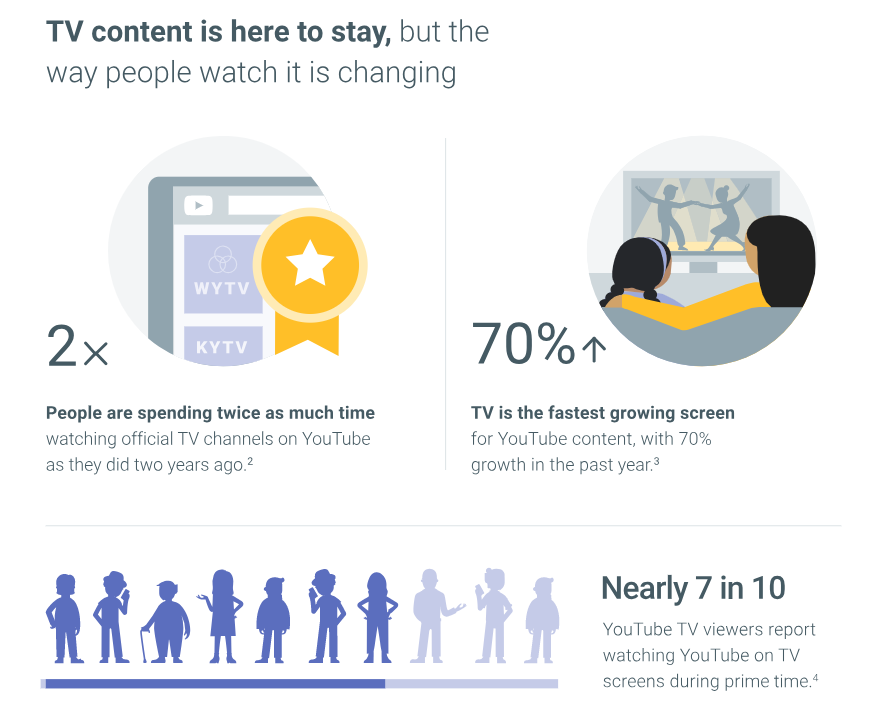
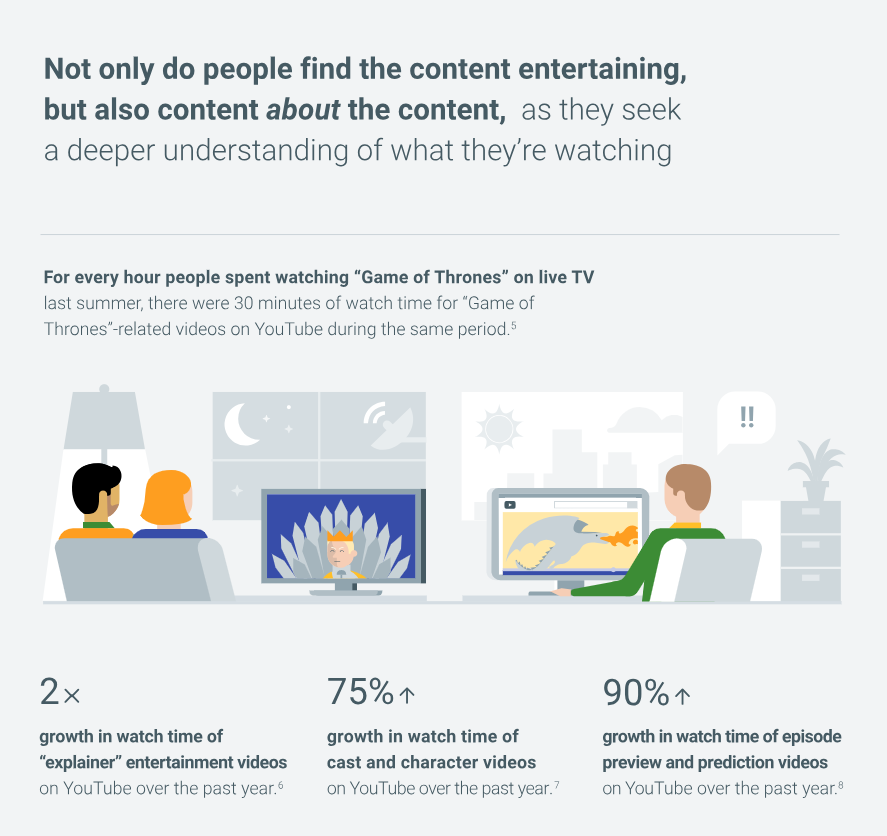
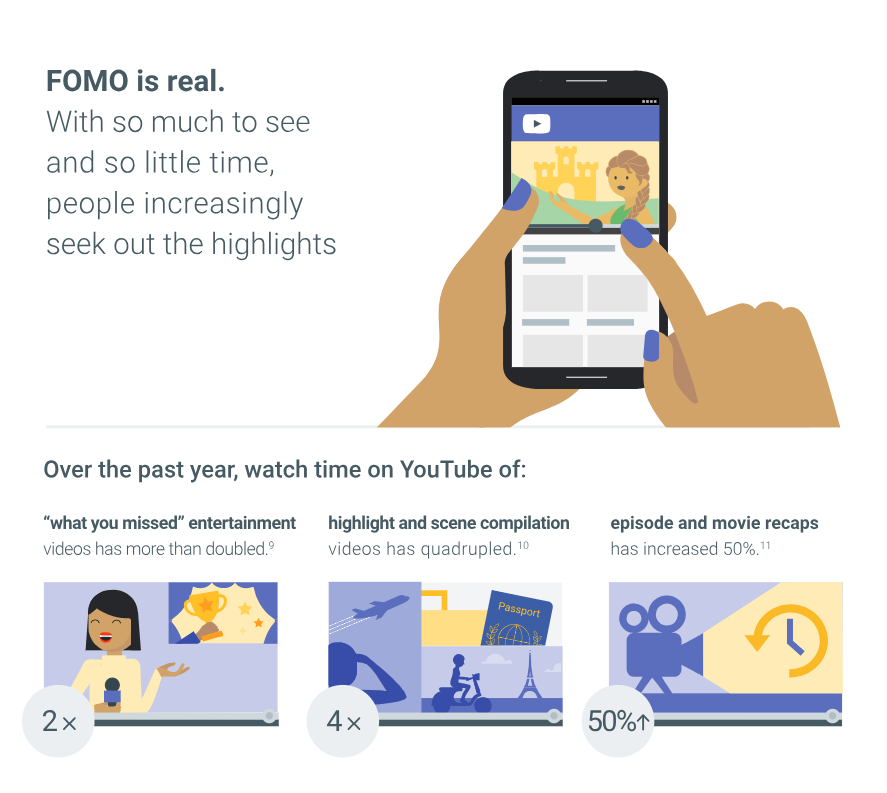
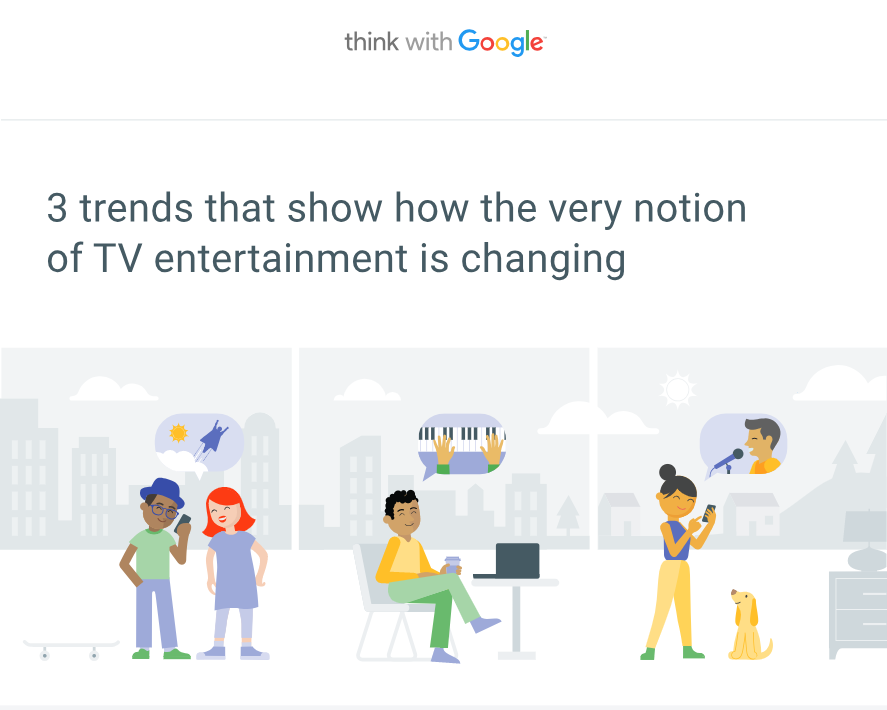
Following is a great infographic from “think with Google” about TV Entertainment, read along as we explain how that has a direct correlation to events. And why maybe it’s time we started thinking about events more like a TV show with a fantastic gigantic cast.


Trend #1


Just as TV content is here to stay so are events and conferences, but now people are attending in their own way whether that is in person or via the live stream. If you aren’t live streaming your events you are missing most of your audience.

Trend #2


Just like how people want to “Game of Thrones”-related videos on YouTube, they also want behind the scenes content from your conference or trade show. It’s time to pull back the curtain and supplement the keynote live stream with “behind the scenes” interviews of the keynote speakers as they come off the stage or in the green room as they are waiting to go on… It’s time to make use your event as an online show that generates the content your audience is hungry for…

Trend #3


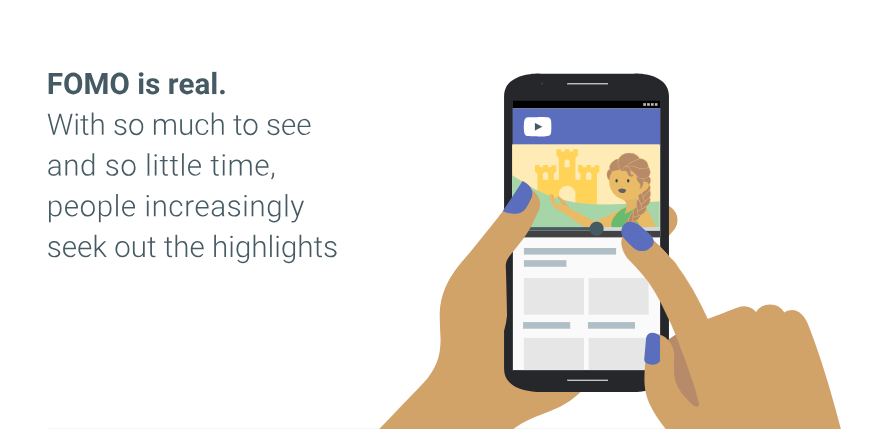
FOMO is real. This is so true. Your audience is dying to attend your event, but life gets in the way for most of your audience and only a small fraction can actually attend your event in person. The Facebook Live stream helps the majority of your audience that can’t attend feel connected in a digital way. At the very least they want to see the highlight video that shows their buddy and their favorite Thought Leader having an engaging conversation in the hallway track. Or their favorite Influencer at the “after party” having a great experience. Or maybe they were present at your event, but like a recent attendee told me, “I don’t attend any of the sessions while I’m at an event, I’m to busy meeting with people. But at home I begin each day by viewing 1-2 of the conference breakout session videos while I’m sipping my coffee.”

If you’d like to learn more about how we can help you extend your event beyond the four walls and into the future, please give us a call at 1-888-695-2396. Or if you’d like to view the complete “think with Google” infographic, click here.


roi-video-1024x479.png

January 10, 2018 Tim Arthur

Every conference organizer and event planner thinks about ROI (return on investment); understandably, they care about turning $1 into $2 (or $20). Fantastic! The good news is 83% of businesses report seeing an ROI with video. Not only that, most marketers agree that video content generates a higher ROI than all other types of content.

With 71% of consumers watching more video online than a year ago, brands can no longer ignore its growing popularity. Thankfully, creating great content has never been easier! Just call the Event Video Experts at e3 Webcasting, we have several levers we can pull to increase attendance, revenue, and the ROI at your event. We love events + video and the convergence of the two. We would be honored to live stream webcast your event, record your speaker sessions, film influencer interviews, capture your community member spotlight videos, and create a highlight reel that showcases your event experience and sponsorship opportunities. We can be reached at 1-888-695-2396 or email us at [email protected]


FEOpsConf1184x407-1024x352.jpg

May 5, 2014 Tim Arthur0

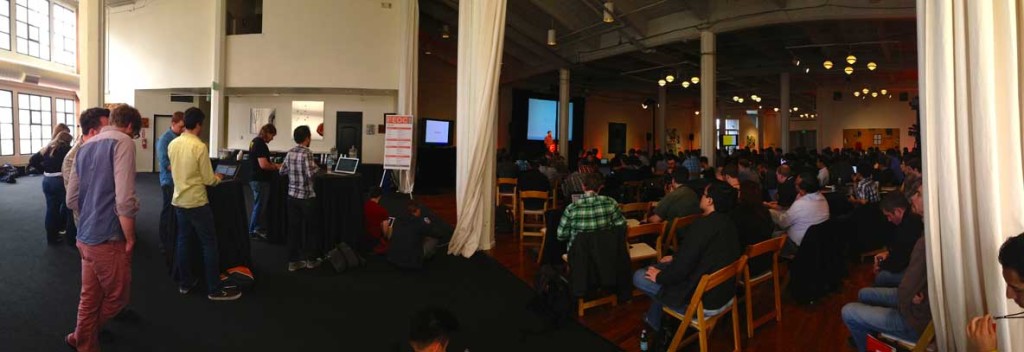
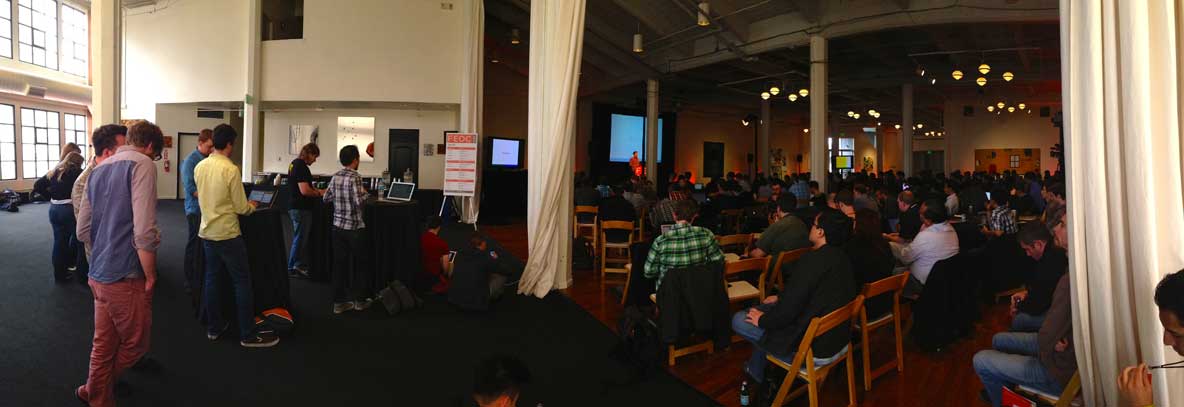
Webcasting from San Francisco, California, Front End Ops Conf hosted by Sauce Labs

Front End Operations is an emerging discipline in web application development and engineering. Front End Ops Conf was a 2-day conference dedicated to this new regimen. e3 Webcasting was honored to film and live stream webcast the sold out conference to the global online community. The conference explored new ideas on topics such as; test automation and application monitoring. Attendees heard first hand about the latest tools for deployment and monitoring from the devs who are using them daily.

Held at the Terra Gallery, which is located in San Francisco’s SOMA district, the venue was spacious and open with an abundance of natural light on both floors. Sauce Labs VP of Engineering, Adam Christian, opened the conference by laying out the FEOpsConf vision for the next 2 days. Next up was Alex Sexton, Conference co-chair and Product engineer at Stripe. Alex gave the first Keynote – “Front End Operations”. Following Alex was Seth Walker, from Etsy, and then Sarah Goff-Dupont, from Atlassian. At this point the live stream webcast viewers outnumbered the attendees present at the conference. By the end of the day, Thursday, the live stream webcast had been viewed by just under 1,200 viewers.

As with most conferences, there was a wealth of amazing information being presented. To keep the crowd going, Rackspace provided ample amounts of caffeine via Ritual Coffee, who set-up a temporary coffee shop on the lower level. The e3 Webcasting crew was very grateful for the delicious coffee that helped keep us alert and focused.

Bertrand Fan, from Flickr’s talk on “Rebooting Flickr On A Node.js Stack, One Page At A Time” walked the audience through the transition to the Node.js stack, presenting a fun, interactive graphic of all the Flickr code commits over the years.

As Sebastian Golasch, from Deutsche Telekom, (which owns T-Mobile) presented his talk, “The Glitch In The Game”, the California Style Sheet Pirate and a couple other video game characters worked together to solve the glitch.

On Friday, Mikeal Rogers, from DigitalOcean, gave a talk on “The Rise of Front End Tooling”. Mikeal used Perspective from Pixxa to present some fun data on Front End Tooling.

The Front End Ops Conf was an incredible conference with speakers ranging from Google Chrome, Lonely Planet, Atlassian, Deutsche Telekom and GitHub. If you missed the conference or you missed the live stream webcast of the conference, you can watch all the session videos on the Front End Ops Conf website. See you next year at the conference or online.

F-E Ops Conf 2014 411

If you’d like to learn more about the Front End Ops Conf or would like to attend the conference in the future, you can find out more by visiting the conference website or following them on Twitter:
Website: F-E Ops Conf
Twitter: @FEOpsConf
Conference Videos On Demand: F-E Ops Conf 2014 YouTube Channel

Some of our favorite Tweets from F-E Ops Conf 2014


SOTMUS-Track-2-Stream.jpg

June 19, 2013 Tim Arthur0

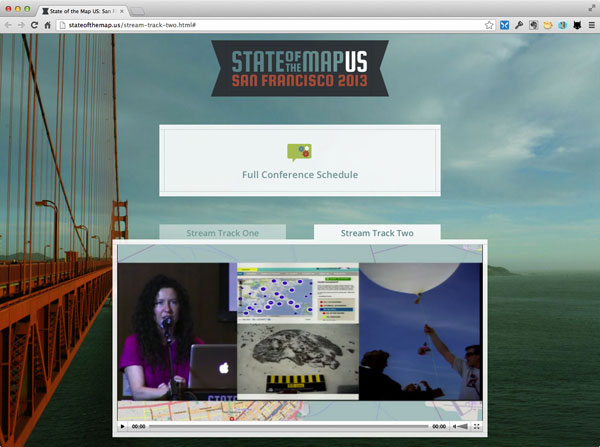
Webcasting from San Francisco, California, Ways to Bring Your Aerial Imagery into OpenStreetMap

Earlier this month the 2013 State of the Map US conference was held in beautiful San Francisco at the Mission Bay Conference Center June 8-9, and e3 Webcasting was honored to live stream webcast video of each session around the globe. 380+ people came out to talk OpenStreetMap, learn from each other, and move the project forward. Bonnie and Alex from the MapBox team were amazing to work with and made sure we had everything we needed to make the live stream video webcast happen.

craigslist and OpenStreetMap

Dennis Watson’s presentation on building a craigslist scale map installation with OpenStreetMap (OSM) data was very insightful. He explained that craigslist serves 50 billion monthly page views to 60 million users across 700 sites in 70 countries, naturalized into 13 languages. Craigslist users post 100 million+ classified ads per month, including more than 2 million new job listings per month, and how self hosting a complete map service from top to bottom at this scale presents many challenges including: live updating of OSM data, map styling and design for sense of purpose, rendering and serving maps to end users, geocoding user input, searching geodetic data, displaying geodetic results in meaningful ways that the end user can understand, giving back to OSM with user data feedback. In his talk Dennis addressed the above issues and discussed how his team implemented the above at craigslist scale. His overview of the zoom tile numbers were staggering at 17 billion tiles. It was great to get an look inside craigslist from a mapping perspective.

OpenStreetMap and foursquare

Nathaniel V. Kelso and David Blackman’s presentation on “Introducing Quattroshapes! The Global Polygon Gazetteer”, was a really interesting insiders look into foursquare’s need for quality place data to power its geocoding engine to ensure the best user recommendations. When someone searches for best coffee in Manhattan, a simple venue to place point or venue to place bounding box search can result in venues in Manhattan and Jersey City overwhelming the results for Manhattan. To improve these recommendations, they’ve created an authoritative source of polygons around a curated list of places. This gazetteer of non-overlapping polygons provides more relevant results to users than just simple point geometries. This work is based on several factors including: geocoded photos from Flickr, foursquare checkins, and an extended version of Natural Earth. This new polygon gazetteer data is used in David Blackman’s TwoFishes, the coarse splitting geocoder (and reverse geocoder) written in scala at foursquare. It was great to get to see how foursquare and others are managing their mapping data.

Building Community in Nicaragua

Felix Delattre’s presentation on community mapping in Nicaragua was a great overview on using OpenStreetMap to get people involved and working with technology. And at the same time building community by making a map of the community. Creating an open data map helps grow the local economy and adds value to the city. His talk covered how the OpenStreetMap community gained momentum in the country, what lessons they have learned on community building with OSM, what real life problems exist, what makes mapping in Central America unique, and where the local community wants to go next. His story-telling session about his experiences, the monthly mapping parties, their influence on local politics, and communities, was very engaging.

The State of the Map US was an amazing conference with speakers ranging from the National Park Service to Voxel.js an open source port of Minecraft, to the Redcross and how maps played a huge role in the Haiti earthquake relief efforts and how the OpenStreetMap project was able to give back to the community. If you missed the conference or you missed the live stream webcast of the conference you can watch all the session videos on the State of the Map US conference website. See you next year at the conference or online.

SOTMUS 2013 Conference 411

If you’d like to learn more about the State of the Map US 2013 Conference or would like to attend a conference in the future, you can find out more by visiting the conference website or following them on Twitter:
Website: SOTMUS
Twitter: @sotmus
Conference Videos On Demand: SOTMUS 2013 Vimeo Channel

Some of our favorite Tweets from the State of the Map US 2013


Bojidar-Live-Stream-1024x576.jpg

May 2, 2013 Isaac Arthur0

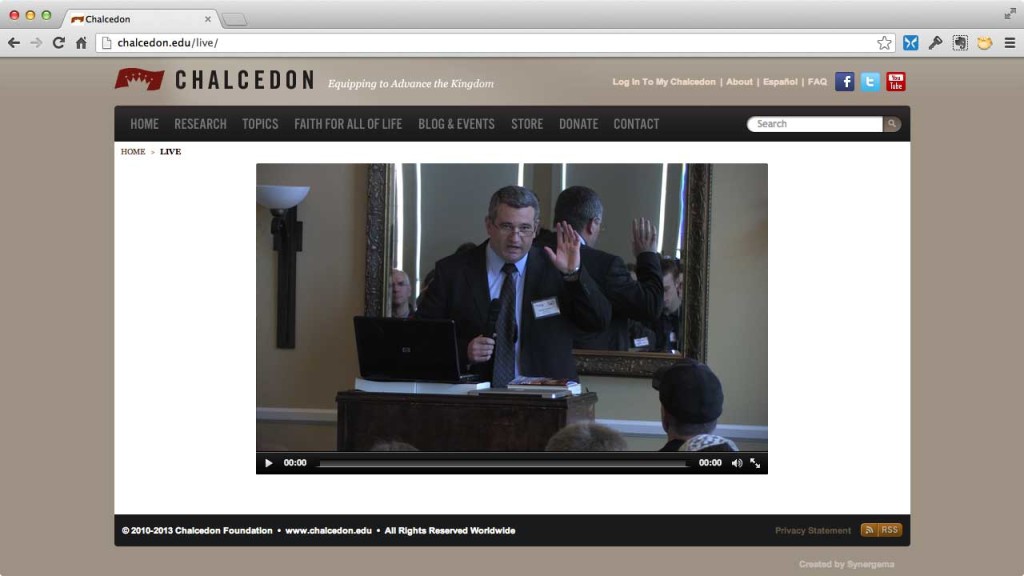
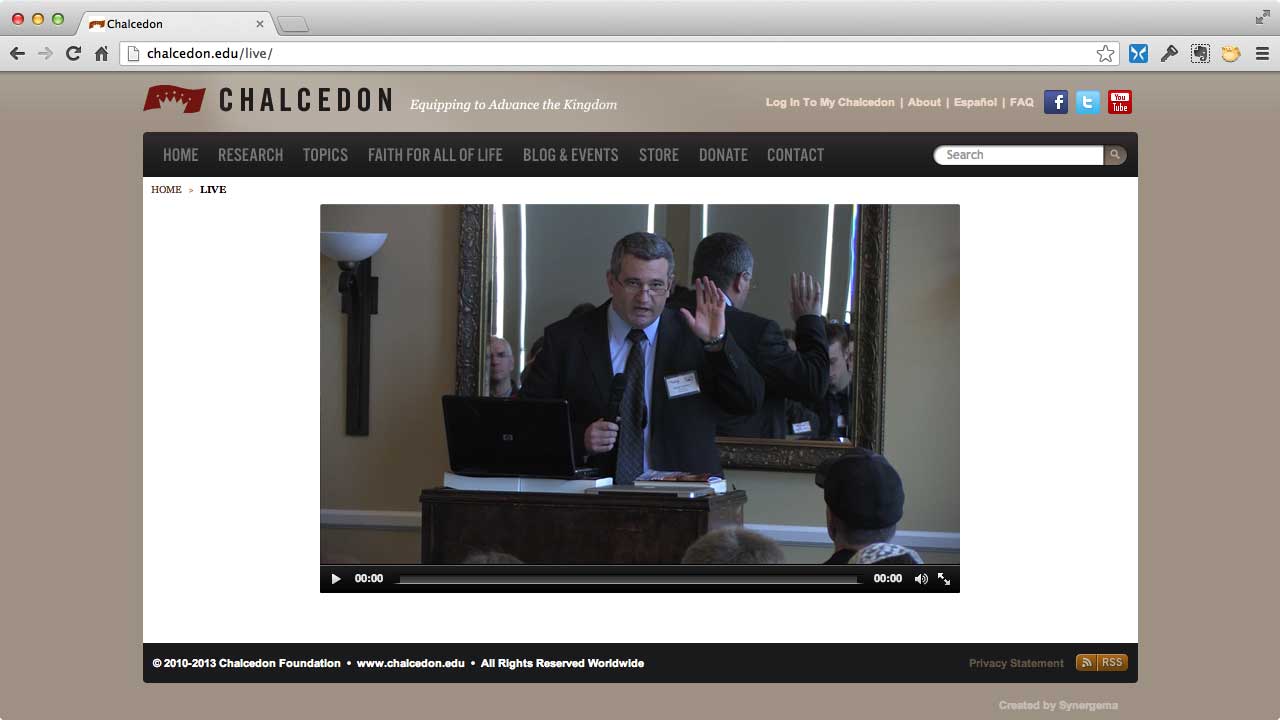
The e3 Webcasting crew live stream webcasting the Law and Liberty Tour from Anacortes, Washington

We Americans have long referred to our nation as, “The Land of the Free and the Home of the Brave,” and we frequently talk about liberty. On the weekend of March 9th, it was the topic of the Law and Liberty Pacific Northwest Tour, a one-day event put on by the Chalcedon Foundation, and live streamed by e3 Webcasting. But what is liberty? Are there limits to liberty? Is law merely the imposition of other men? How can we avoid the extremes of anarchy on the one hand and tyranny on the other? These are all good questions for any “Son of Liberty” to wrestle with, and they also happen to be a few of the questions that were addressed this weekend.

Chalcedon is a Christian educational organization, based out of Vallecito, CA, that seeks to promote the ideas of Biblical Christianity as they apply to every area of life. This event takes its name from a book by the same title, which written in 1984 by the organization’s founder, R.J. Rushdoony. The day featured talks from two distinguished speakers: Mark Rushdoony, the president of Chalcedon, and Bojidar Marinov, a missionary and author who leads a ministry to his homeland of Bulgaria. Both of these men spoke passionately about the ideas that have shaped Western Civilization over centuries of history.

The event, which was coordinated by Chalcedon’s Andrea Schwartz with the help of a local family, was held at the charming Majestic Inn in Anacortes, Washington, a town north of Seattle, WA. The crowd numbered over a hundred, and was made up of a wide demographic, ranging from families with kids, to young adults and college-age students, to older adults. They listened intently as Rushdoony and Marinov unpacked the theological and political ideas that are encompassed in the topic of law, and the nature of true liberty. Rushdoony opened the day with a historical overview of “How We Went From Liberty to Statism” and Marinov followed up with a dissertation on “Ethics as the Foundation for Liberty.” The afternoon talks delved into reasons for Christians to be optimistic, and the structure of a Biblical society.

The Law and Liberty Pacific Northwest Tour was a success, and the stream went well. Some may wonder why you would live stream an event such as this, but there are many reasons to do so. In addition to the people who were in attendance at The Majestic, more people, unable to travel to the event, were able to watch via the live stream. Chalcedon and organizations like it have extremely important, timely messages; and they desire to reach as many people as they can with what they have to say. Obviously, live streaming technology will never replace person-to-person interaction, but it does allow for ministries, organizations, and speakers to broadcast their ideas around the nation, and even the world. Live streaming is the future for the spreading of ideas and concepts, and anyone with something to say should consider taking advantage of it. It was great to be able to stream Chalcedon’s event, and it will be exciting to see where this goes in the future, whether America will once again be a free and independent republic.

Law & Liberty Chalcedon Foundation Tour 2013 411

If you’d like to learn more about the Law & Liberty Conference or would like to attend a conference in the future, you can find out more by visiting the conference website or following them on Twitter:
Website: Chalcedon Foundation
Twitter: @RJRushdoony
Facebook: Chalcedon Foundation Facebook Page
Conference Videos On Demand: Chalcedon Foundation YouTube Channel


e3 Webcasting
Privacy Overview

This website uses cookies so that we can provide you with the best user experience possible. Cookie information is stored in your browser and performs functions such as recognising you when you return to our website and helping our team to understand which sections of the website you find most interesting and useful.