
WHAT’S GOING ON

Behind-The-Scenes

In the e3 Webcasting Studio

TXJS_Stream.jpg

June 5, 2013 Isaac Arthur0

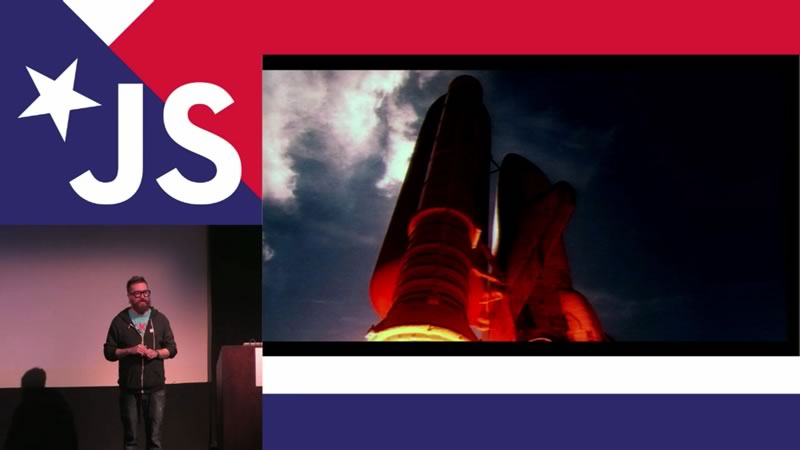
Webcasting from Austin, Texas, The e3 Webcasting crew powers up the live stream for TXJS.

As people across the nation tuned into the TXJS Live Stream Webcast to view the conference from the convenience of their office, iPad or smartphone the conference team was getting ready to open the doors. It was a hot Texas day, although still early in the morning, as men and women crowded into the historic Paramount Theatre in Austin. Laptops open, a cup of coffee and a taco in hand, the audience got ready to hear from co-laborers and experts in their particular line of work. What event was this? The Texas JavaScript Conference (TXJS) held on April 15, 2013.

Topics Covered at TXJS

JavaScript (JS) may be beyond the comprehension of most of us not in the programming world, but for those in that field this event proved to be quite an exciting and festive gathering. Speakers from around the United States and the United Kingdom spoke on a variety of subjects, from HTML, CSS, and Node.js to things like web applications, entrepreneurism, content management systems, the legal issues related to open source, and how the British government was able to revamp their “user experience.” Sound like a jam-packed day? That wasn’t even the half of it!


Conference organizer Alex Sexton brought together this diverse group of developers and designers to celebrate, learn, and anticipate the future of their craft. With the TXJS Conf. being only a one-day event, there was a lot to fit into the sessions, and a lot of catching-up and networking to do in between.

Live Video Webcast Expands the TXJS Conference Reach

But, with something as big and widely used as JavaScript, the estimated 325 people in attendance there at the Paramount in Austin were not the only interested parties; nor were they the only die-hard JS fans out there. This year e3 Webcasting was brought in to provide live streaming of all the sessions for TXJS. Once the stream went live and the talks began, 250 + online viewers tuned in to catch the event. These were not merely distant, mildly curious on-lookers who tuned in for five minutes and moving on – this was a steady audience-base that hung with us for the majority of the day. The numbers grew throughout the morning sessions, which began around 9 am, and only started decreasing toward the end of the day (which wrapped up at roughly 6:30 pm). The largest amount of online viewers exceeded 300. This means that nearly double the amount of people who actually came to Austin that day were able to be a part of the conference’s activities.

Frances Berriman | TXJS 2013 from SlexAxton on Vimeo.

Reaching the other 90% of Your Audience via Streaming

Clearly, whether we’re talking about a weeklong mega-event or a single-day, one-track conference, everyone has the ability to maximize the potential of webcasting technology to reach the other 90% of their audience that isn’t physically present. It was a pleasure to be a part of Texas JavaScript Conference and to bring the event to the more-than-300 people who were able to watch the stream that day. This was not only a success for this year’s TXJS, but could also have benefits in the future – anyone avid enough to watch a conference online for a whole day will definitely want to be there in person the following year! Like the final speakers who talked about the future of the industry and the exciting places it might go, we are thrilled to be involved in the business of webcasting, and are looking forward to what comes next.

TXJS 2013 Conference 411

If you’d like to learn more about the TXJS Conference or would like to attend a conference in the future, you can find out more by visiting the conference website or following them on Twitter:
Website: TXJS
Twitter: @TXJS
Conference Videos On Demand: TXJS Vimeo Channel

Bojidar-Live-Stream-1024x576.jpg

May 2, 2013 Isaac Arthur0

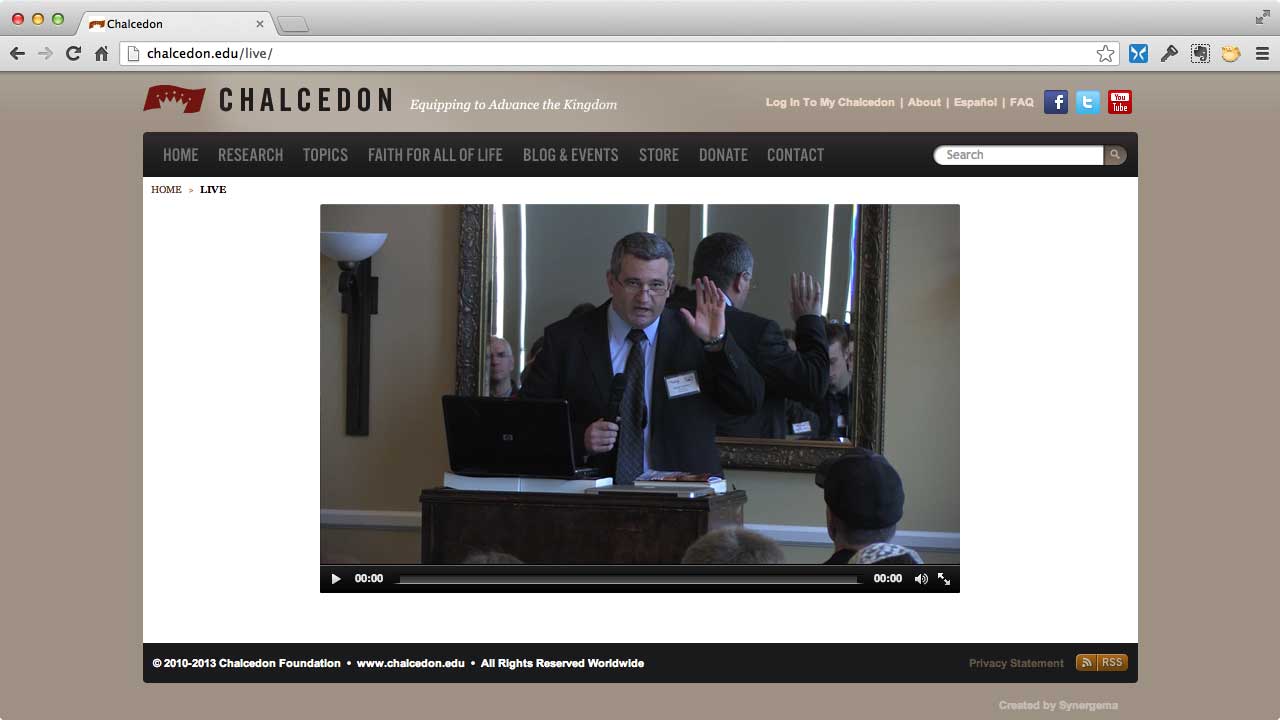
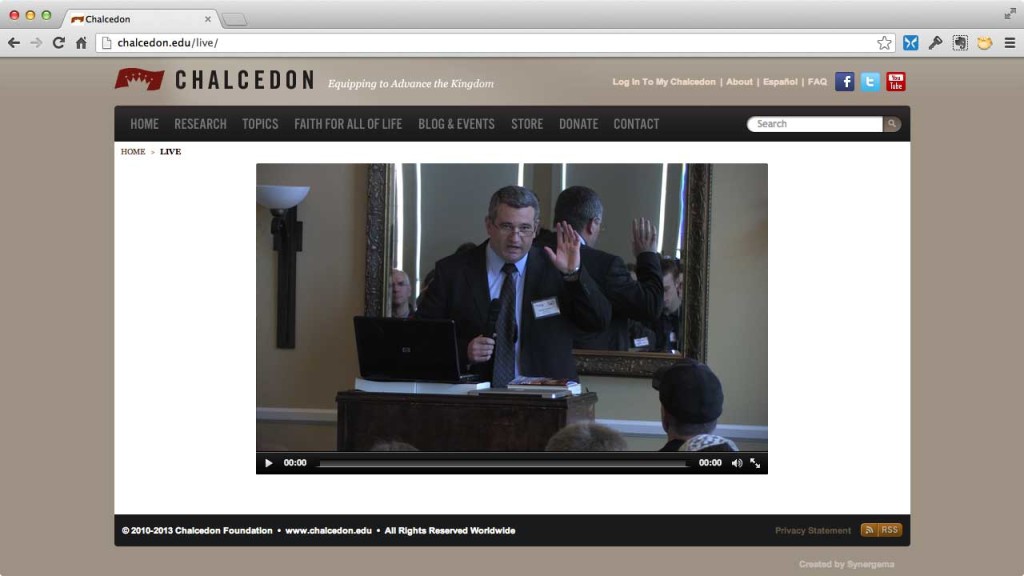
The e3 Webcasting crew live stream webcasting the Law and Liberty Tour from Anacortes, Washington

We Americans have long referred to our nation as, “The Land of the Free and the Home of the Brave,” and we frequently talk about liberty. On the weekend of March 9th, it was the topic of the Law and Liberty Pacific Northwest Tour, a one-day event put on by the Chalcedon Foundation, and live streamed by e3 Webcasting. But what is liberty? Are there limits to liberty? Is law merely the imposition of other men? How can we avoid the extremes of anarchy on the one hand and tyranny on the other? These are all good questions for any “Son of Liberty” to wrestle with, and they also happen to be a few of the questions that were addressed this weekend.

Chalcedon is a Christian educational organization, based out of Vallecito, CA, that seeks to promote the ideas of Biblical Christianity as they apply to every area of life. This event takes its name from a book by the same title, which written in 1984 by the organization’s founder, R.J. Rushdoony. The day featured talks from two distinguished speakers: Mark Rushdoony, the president of Chalcedon, and Bojidar Marinov, a missionary and author who leads a ministry to his homeland of Bulgaria. Both of these men spoke passionately about the ideas that have shaped Western Civilization over centuries of history.

The event, which was coordinated by Chalcedon’s Andrea Schwartz with the help of a local family, was held at the charming Majestic Inn in Anacortes, Washington, a town north of Seattle, WA. The crowd numbered over a hundred, and was made up of a wide demographic, ranging from families with kids, to young adults and college-age students, to older adults. They listened intently as Rushdoony and Marinov unpacked the theological and political ideas that are encompassed in the topic of law, and the nature of true liberty. Rushdoony opened the day with a historical overview of “How We Went From Liberty to Statism” and Marinov followed up with a dissertation on “Ethics as the Foundation for Liberty.” The afternoon talks delved into reasons for Christians to be optimistic, and the structure of a Biblical society.

The Law and Liberty Pacific Northwest Tour was a success, and the stream went well. Some may wonder why you would live stream an event such as this, but there are many reasons to do so. In addition to the people who were in attendance at The Majestic, more people, unable to travel to the event, were able to watch via the live stream. Chalcedon and organizations like it have extremely important, timely messages; and they desire to reach as many people as they can with what they have to say. Obviously, live streaming technology will never replace person-to-person interaction, but it does allow for ministries, organizations, and speakers to broadcast their ideas around the nation, and even the world. Live streaming is the future for the spreading of ideas and concepts, and anyone with something to say should consider taking advantage of it. It was great to be able to stream Chalcedon’s event, and it will be exciting to see where this goes in the future, whether America will once again be a free and independent republic.

Law & Liberty Chalcedon Foundation Tour 2013 411

If you’d like to learn more about the Law & Liberty Conference or would like to attend a conference in the future, you can find out more by visiting the conference website or following them on Twitter:
Website: Chalcedon Foundation
Twitter: @RJRushdoony
Facebook: Chalcedon Foundation Facebook Page
Conference Videos On Demand: Chalcedon Foundation YouTube Channel


hobbit.jpg

December 31, 2012 Isaac Arthur0

Live stream webcast of the Hobbit Movie World Permiere

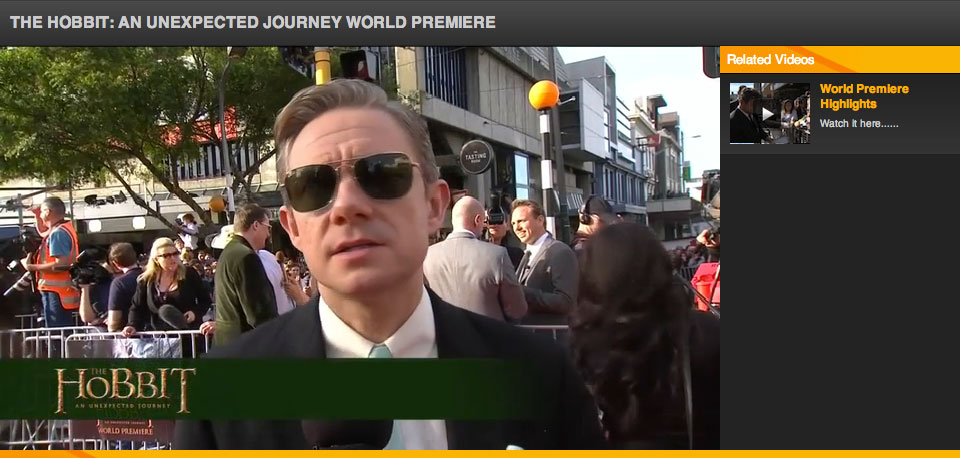
Examples of the game-changing nature of webcasting are everywhere you look. From large conferences to political conventions to smaller niche events, live streaming is exploding all over the planet and in many different settings. Now, even major motion picture studios are realizing the value that this powerful resource can bring. This last November, by employing Hollywood event streaming company Now Live, the Warner Bros. and New Line Cinema social media users from around the world were able to virtually travel to New Zealand to participate in one of the most highly anticipated movie events of the year: the world premiere of director Peter Jackson’s newest trek into Middle Earth, the world of author J.R.R. Tolkien’s fantasy literature, The Hobbit: An Unexpected Journey.

I tuned-in to the stream that night, along with thousands of Tolkien and movie enthusiasts: because, being in the business of webcasting, and a fan of the films as well, I had a staked interested. After clicking the link to the stream’s page on Facebook, it was apparent that they had rolled out the red carpet, not only for the film’s cast and crew, physically in attendance in Wellington, but also for the curious and expectant audience across the globe. Those watching the live stream of the pre-show premiere festivities were treated to sweeping shots of the lengthy red carpet, musical performances by Neil Finn and his band (Finn is a New Zealander himself and the music artist behind the “Song of the Lonely Mountain” which is featured in the movie’s credits) and up-close interviews with the actors and filmmakers who created the film. Even if one had the opportunity to be there in person, one probably wouldn’t have had a better experience than sitting at home watching the stream.

Between delighting fans with behind-the-scenes stories and glimpses of their favorite actors, as well as enticing others to find out more about the film, and boosting the hype and excitement about The Hobbit before its theatrical release, the live stream webcast was a huge success. All the music, the celebrity sightings, and the sneak peeks at movie itself (not shown in the live stream, of course) had the effect of generating even more word of mouth and anticipation. Hollywood marketers know how to pack people in and the live-streamed premiere is just one way that technology has given studios a way to reach audiences. The movie has been in theaters since December 14 and has remained in the Top 10 in the box office, currently #1 – ahead of the Django Unchained and Les Misérables – and has grossed $222.7 million. Not to commit the fallacy of assuming that the live stream webcast was the deciding factor here, yet one does have to wonder how live streaming technology could have helped reach greater numbers of filmgoers and propelled the other films to the top slot now occupied by Peter Jackson’s The Hobbit. Speculation aside, it is quite clear that live streaming is quickly becoming an indispensable tool for conferences, events, and the silver screen.


GMO-FREE-Jeffrey-Smith.jpg

November 9, 2012 Isaac Arthur0

Arnout Kazemier from Nodejitsu, @3rdEden, presenting at RealtimeConf

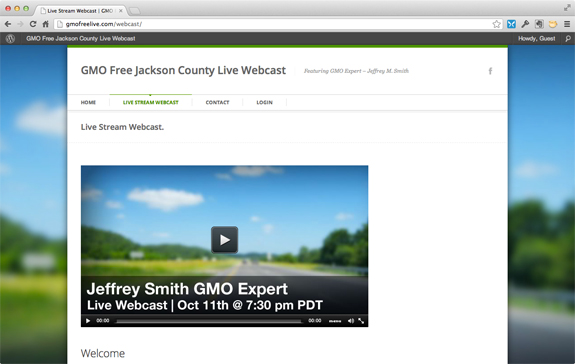
What if you could have accessed vital information about a biotech industry hijacking of American foods and agriculture – information that could change the way you think, eat, shop, and vote – all from the comfort of your home? Well, for one night in the middle of last month, you could have. That is, e3 Webcasting live streamed a talk given by author, activist, and filmmaker Jeffrey M. Smith put on by GMO-Free Jackson County and sponsored by the Ashland Food Co-op and Project Rogue Valley via the GMO-Free Live website.

Smith’s talk dealt with the terribly adverse effects of genetically modified organisms (GMO’s) on the health of human beings, the soil of our farms, and the threat to the very freedoms of our nation posed by monopolistic GMO-promoting companies like Monsanto and Syngenta. His books and recent film, titled “Genetic Roulette: The Gamble of our Lives,” join a long line of films and books, such as the Academy Award Nominated documentary “Food, Inc.” and agricultural reformer Joel Salatin’s book “Folks, This Ain’t Normal” in sounding a warning against GMOs.

This issue is one that involves a wide range of people from various age groups, walks of life, and political persuasions. From concerned conservatives to the liberal “foodies” of the organic movement, from farmers to scientists to health fanatics, GMOs have become a hot-button topic of discussion and debate. Jeffrey Smith spoke to an auditorium full of Southern Oregon residents, some of them die-hard supporters of Project Rogue Valley already, and others, perhaps, merely curious about the controversy surrounding GMOs, and which has been raging since their introduction. That night represented the efforts of a grassroots movement from the local area, and Smith was practically a celebrity there. He was able to bring his knowledge of the issue to bear; knowledge gained from extensive research, writing, and leadership around to the world. He has worked hard to educate citizens, empower activists, and influence legislators. He spent the night citing facts and data, exposing the destructive track record of GMO’s in our nation and globally. He made a strong case for attaining the status of “GMO-free” for Jackson County, as well as for other initiatives such as California’s Prop 37, a bill requiring GMO products to be labeled, which is currently being battled out in the Golden State. His talk was persuasive, despite the marketing and the political spin created by the GMO manufacturers. As second U.S. President John Adams once said, “Facts are stubborn things; and whatever may be our wishes, our inclinations, or the dictates of our passions, they cannot alter the state of the facts and evidence.”

Wherever you come down on this particular issue, webcasting events such as these can help spread awareness, and bring in a wider audience then those already committed or curious enough to attend in person. There are many causes like GMO-Free Jackson County that need to broadcast their message to American citizens, or even to worldwide audiences. Live streaming could be the key to disseminating critical information and starting a movement. That’s what e3 is all about: changing the world, one webcast at a time…


RealTimeConf_image.jpg

November 9, 2012 Isaac Arthur0

[custom_frame_left]
Arnout Kazemier from Nodejitsu, @3rdEden, presenting at RealtimeConf[/custom_frame_left][clear]

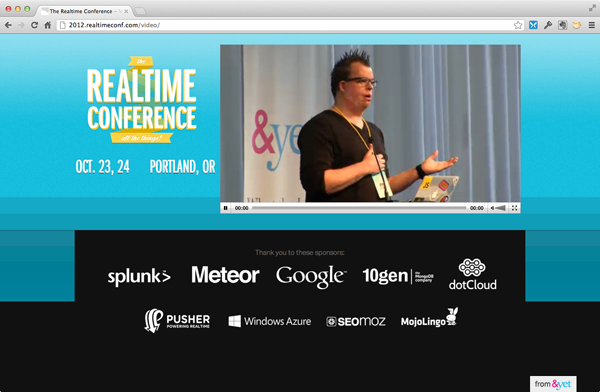
For just two days, programmers and developers from all over the world gathered under one roof in Portland, Oregon for the 2012 Realtime Conference organized by web application and design team &yet, and sponsored by such companies as Google, DotCloud, Windows Azure, SEOMOZ, MojoLingo, and more. This was the second year this kind of an event had happened. Last year in November the same group put on the “Keeping It Realtime” conference. However, this year would be different in one crucial way: this year &yet hired e3 Webcasting to live stream the conference and the more narrowly focused RedisConf the day before (see previous article for details).

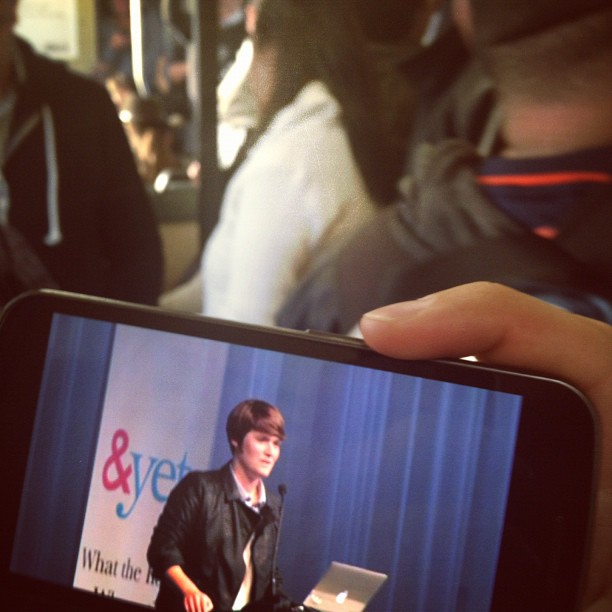
[custom_frame_left]via the RealtimeConf live web stream[/custom_frame_left]The conference was held at PureSpace, a venue in Portland’s Pearl district. The people at &yet had a big vision for making this conference the highlight of the year for their attendees: they did things with style. On the first morning, the attendees were shuttled to the conference from the hotel, but were dropped off a few blocks away where a marching band awaited them to escort the crowd of developers into the building with fanfare! That night, the conference set them home with a surprise performance by a children’s choir. Delicious food, lots of coffee, and an impressive line-up of speakers kept the conference rolling; but behind all this, there was a team of busy workers making it all happen. As the providers of the live streaming, e3 Webcasting was part of that crew.

Flexibility and problem solving are required whenever you are dealing with live events (which is the definition of webcasting). For instance, the night before the conference, as we were setting up our gear, we discovered that the projector, which was supposed to have an HDMI connection, only had a VGA connection. Thankfully, we were able to track down a converter / scaler that allowed us to use the projector feed in the live streams (for the presenters’ slides). But, in spite of technical speed bumps, the conference’s webcast turned out excellently.

The final night of RealtimeConf, &yet founder Adam Brault gave an inspiring call-to-action to his family of techies. He boldly challenged them to pursue the betterment of their work, and in the process, the betterment of the world. “To whom much has been given, much is required.” He called on his audience to become leaders in their respective spheres of influence. This stirring address put all the information that had been covered over the last two days into perspective. Thankfully, those who were unable to physically travel to Oregon did not have to miss out on this motivating presentation, thanks to live-streamed video. From the very first session of the conference to Adam’s closing talk, remote viewers were able to participate in the annual event. Webcasting the conference made it possible to spread the excitement and the inspiration of Realtime to a wider audience; incentivizing people who will want to be a part of it next year, and who knows where it will go from there.

[message type=”custom”]If you’d like to learn more about the RealtimeConf or would like to attend next year’s conference you can find out more by visiting the conference website or following them on Twitter:
RealtimeConf
@RealtimeConf
#RealtimeConf
[/message]

photo credit: Watching @caseorganic talk at #realtimeconf, in real time, on BART! Aaron Parecki via a cc


e3 Webcasting
Privacy Overview

This website uses cookies so that we can provide you with the best user experience possible. Cookie information is stored in your browser and performs functions such as recognising you when you return to our website and helping our team to understand which sections of the website you find most interesting and useful.